
/ Contact Us
Zhejiang Linchuan Machinery Manufacturing Co., Ltd.
No. 88 Wenbo Road, Jinxi Development Zone, Wucheng District, Jinhua City, Zhejiang Province, China
+86-13605822008
2026-10-30
Missing technical drawings do not always prevent buyers from sourcing replacement crusher components. Older machines, discontinued models, incomplete maintenance records, and worn parts can make identification difficult, especially for overseas purchasing teams. However, ordering a replacement based only on visual similarity may create dimensional mismatches, material inconsistencies, or installation problems.
At Zhejiang Linchuan Machinery Manufacturing Co., Ltd., we understand that buyers may not have access to complete equipment documentation. Our approach to crusher machine spare parts inquiries focuses on gathering available technical evidence, confirming critical requirements, and clarifying uncertainties before an order moves forward.
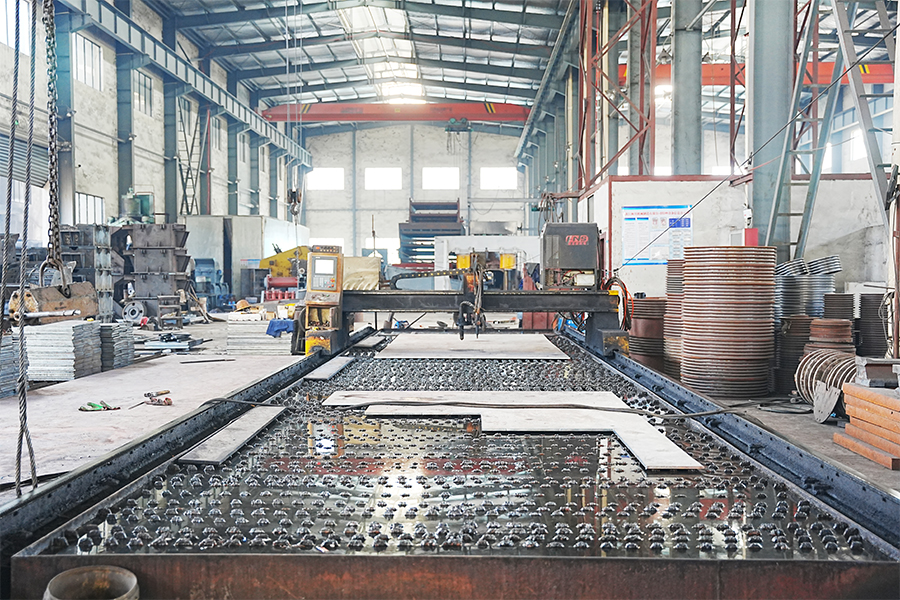
The original drawing is useful, but it is not the only source of identification information. Buyers can often begin with equipment records and physical references already available at the plant.
For example, an impact crusher blow bar should be identified by its rotor arrangement, dimensions, locking interfaces, and installed position rather than its general appearance alone. Similar-looking components may differ in geometry or attachment details.
Clear photographs and controlled measurements can provide a useful starting point for technical review. Buyers should photograph the complete component as well as the interfaces that determine installation and fit.
Measurements should include appropriate tolerances for critical interfaces rather than relying entirely on nominal dimensions. A worn component may also have lost material, so its current measurements may not represent the original manufactured dimensions.
Matching the shape is not enough. Crusher parts experience different combinations of impact, abrasion, compression, and mechanical loading. A replacement material must suit the component's function and operating environment.
Share the following information with the supplier:
For example, high-manganese steel may be suitable for certain impact and work-hardening applications, while other components may require different alloy systems. The appropriate material depends on the part design and actual duty. Buyers should not assume that a material grade is interchangeable simply because the replacement has similar dimensions.
After reviewing the available evidence, the supplier should identify any information gaps that could affect manufacturing or installation. A written confirmation process helps prevent assumptions from becoming production requirements.
Reverse engineering or sample-based reproduction may be possible for certain parts, but suitability depends on the quality of the available sample and the complexity of the component. Safety-critical or highly loaded parts may require additional engineering verification before a replacement can be approved.
Suppliers may interpret incomplete inquiries differently. One quotation might assume a particular material grade, while another includes additional machining or inspection. Buyers should compare offers only after clarifying their scope.
At Linchuan, we encourage buyers to submit all available references with their inquiry. This helps us identify which details can be established from existing information and which require further confirmation.
Crusher spare parts can sometimes be sourced without original equipment drawings, provided that sufficient alternative evidence is available to identify the component and verify its critical requirements. Equipment records, photographs, measurements, material information, and written technical approval all contribute to a more reliable purchasing process.
Zhejiang Linchuan Machinery Manufacturing Co., Ltd. welcomes inquiries from quarry operators, mining companies, and industrial distributors seeking crusher replacement components. Send us the machine model, photographs, available dimensions, part markings, material requirements, and operating details. Our team can review the information and clarify the next steps toward a technically defined quotation.
HOT PRODUCTS
interested?
Contact us!

No. 88 Wenbo Road, Jinxi Development Zone, Wucheng District, Jinhua City, Zhejiang Province, China

+86-18869925678
+86-13605822008

Mining Crushing & Sand-Making Manufacturer
 English
 中文简体
 русский