
/ Contact Us
Zhejiang Linchuan Machinery Manufacturing Co., Ltd.
No. 88 Wenbo Road, Jinxi Development Zone, Wucheng District, Jinhua City, Zhejiang Province, China
+86-13605822008
2026-09-19
Rock does not enter every crushing chamber with the same size, shape, hardness, or feed distribution. Granite may arrive as large, angular fragments, while crushed limestone may contain a wider range of smaller particles. These differences change the working conditions inside a cone crusher and make chamber profile an important part of equipment configuration.
At Linchuan, we approach cone crusher chamber design from the material side rather than treating every application as the same. Our product range includes cone crusher mantles, concaves, and other wear-resistant castings, so we pay close attention to the relationship between the liner profile and the rock entering the cavity. Our experience with mining crushing and wear-resistant castings also helps us evaluate feed opening, CSS, eccentric throw, reduction requirements, and liner geometry as a connected system.
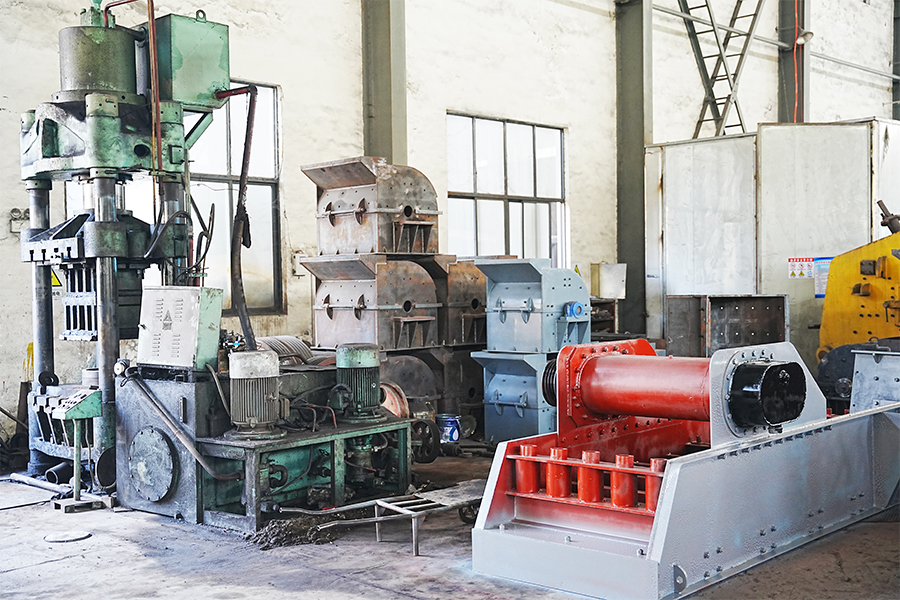
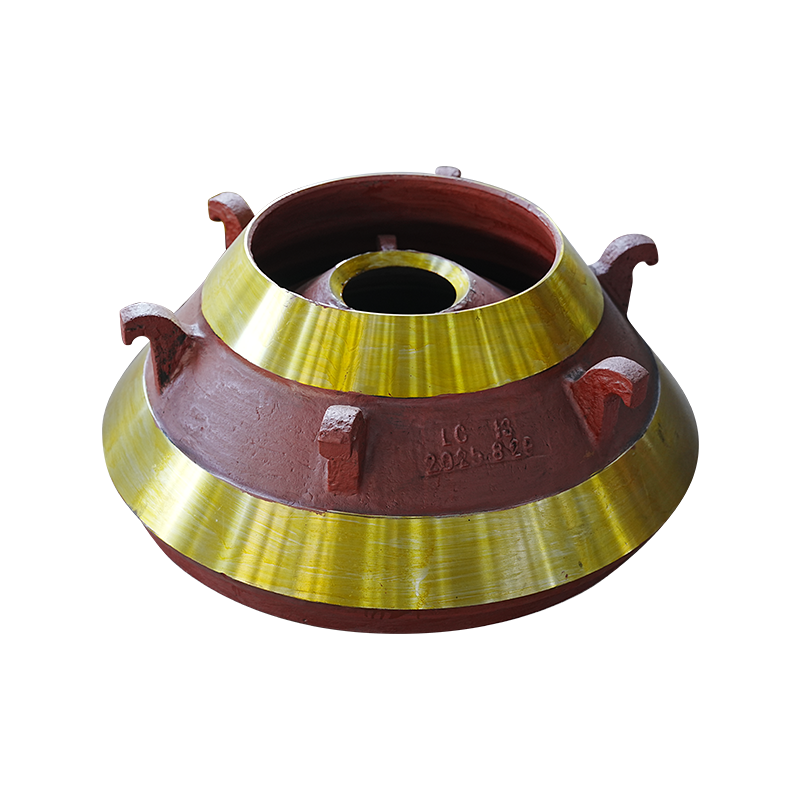
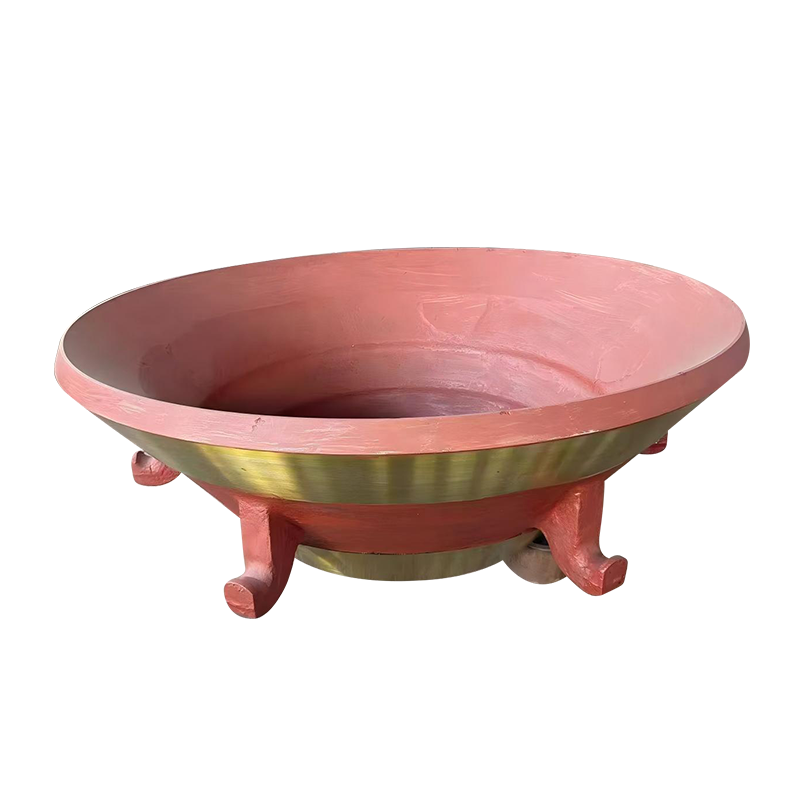
The crushing chamber is formed by the mantle and concave. Their profiles create the space through which rock travels, receives compression, and moves toward the discharge opening. A change in this geometry can alter the feed size range, reduction pattern, product gradation, and contact area between rock and liner.
Technical references describe chamber choice as a balance between feed characteristics, eccentric throw, and closed-side setting (CSS). A larger feed requires sufficient chamber intake, while a finer product generally requires a tighter configuration.
These categories are not simply labels. The actual profile, feed opening, parallel zone, mantle geometry, and concave shape all influence the way material moves through the cavity.
Feed size deserves attention before discussing the final product. A chamber designed around a relatively small feed cannot safely accept oversized rock simply because the crusher has sufficient motor power. Oversized particles can interfere with material movement and increase mechanical loading.
Our approach is to examine the complete feed distribution rather than relying only on the largest single rock. Feed top size, average size, fines content, moisture, shape, and hardness can all influence the actual crushing condition. Metso also identifies feed gradation, bulk density, moisture, clay content, and crushability as important factors affecting cone crusher performance.
| Feed Characteristic | Potential Chamber Concern | What We Review |
| Large top-size rock | Restricted chamber entry | Feed opening and cavity profile |
| Wide size distribution | Uneven material loading | Feed grading and chamber geometry |
| High fines content | Reduced free space inside the cavity | Screening and feed distribution |
| Hard, abrasive rock | High liner contact and wear | Mantle and concave material |
| Flaky or elongated particles | Different breakage behavior | Chamber profile and CSS |
Closed-side setting, commonly called CSS, represents the smallest distance between the mantle and concave during the crushing cycle. It has a direct relationship with product gradation, capacity, and power demand. A tighter CSS generally produces a finer product, while a wider CSS normally permits a coarser discharge.
That relationship makes CSS an important reference point during chamber configuration. Suppose a project requires aggregate around the 10–20 mm range. The desired product cannot be considered separately from the chamber profile and feed condition. Running a coarse chamber at an unusually tight setting may not provide the same result as using a cavity designed around finer reduction.
We therefore review the target product size together with the available CSS range, rather than treating CSS as an independent adjustment.
| CSS Condition | Typical Product Direction | Configuration Consideration |
| Wider CSS | Coarser material | Greater discharge opening |
| Medium CSS | Intermediate gradation | Balanced reduction requirement |
| Tighter CSS | Finer material | Higher compression within the cavity |
Actual product gradation varies with chamber design, eccentric throw, feed distribution, rock characteristics, and liner condition. A fixed CSS number should therefore not be treated as a universal product-size guarantee.
Eccentric throw describes the movement of the mantle away from its central axis. This movement determines how the crushing gap changes during each cycle and influences how material travels through the chamber. Sandvik explains that a larger eccentric throw allows the mantle to move farther from the concave, giving particles more space to move downward during each revolution.
CSS and eccentric throw should therefore be considered together. Two cone crushers operating at the same CSS can behave differently with different throw settings. A chamber profile that works well with one configuration may require another setting to produce the desired material flow.
A cone crusher mantle cannot be evaluated separately from its matching concave. Both components form the working cavity, and their profiles need to maintain the intended crushing geometry throughout the wear cycle.
Our cone crusher spare parts range includes cone crusher mantles and cone crusher walls. We focus on casting geometry, material selection, dimensional consistency, and application requirements during production. Linchuan also supplies high manganese steel and high chromium cast iron fittings for different crushing applications. Our website lists cone crusher spare parts alongside impact crusher, hammer crusher, and jaw crusher components.
Wear changes the shape of the cavity gradually. A new liner and a worn liner do not present exactly the same crushing geometry. That means product size, material flow, and liner contact should be reviewed across the working life of the components rather than only at installation.
Granite, basalt, and other hard rock materials can place substantial stress on crushing liners. Material hardness alone, however, does not describe the complete application. Abrasiveness, feed shape, feed size distribution, moisture, and the required product range also matter.
Our experience with granite crushing production lines gives us a practical reference for examining these factors together. Linchuan's published project portfolio includes a granite crushing production line as well as several stone and sand-making projects.
Hard and abrasive feed can make liner material and profile especially important. A suitable casting specification needs to balance wear resistance with the mechanical demands created by repeated compression. We evaluate these conditions before recommending a mantle or concave configuration.
Buyers working with cone crusher manufacturers can prepare several basic figures before discussing a chamber. Having these details available makes technical communication more precise and reduces the chance of matching the cavity to an incomplete feed description.
We do not treat a cone liner as an isolated casting. Our process starts with the crusher model and application information, then moves toward chamber geometry, material specification, dimensions, and operating conditions.
| Project Information | Our Focus |
| Crusher model | Dimensional compatibility |
| Feed size | Chamber intake and profile |
| Rock characteristics | Wear material and casting requirements |
| Target product | CSS and cavity configuration |
| Operating conditions | Expected wear pattern and service conditions |
| Replacement requirements | Mantle and concave matching |
Our 30-acre facility and engineering team support mining crushing, sand-making, and wear-resistant casting projects. We manufacture high manganese steel and high chromium cast iron components and provide crushing equipment solutions for different material conditions.
A crusher model provides the framework, but the chamber profile determines much of the interaction between the machine and the rock. Feed size, CSS, eccentric throw, mantle geometry, concave profile, material hardness, and target product should be reviewed as a connected set of parameters.
Our recommendation is to start the discussion with actual feed and product data. A clear material profile gives us a stronger basis for matching cone crusher spare parts to the working cavity. That approach also gives buyers a more useful technical conversation with cone crusher manufacturers, especially for projects involving hard rock, variable feed, or multiple product sizes.
At Linchuan, we continue to develop cone crusher wear parts around real crushing conditions. Whether the requirement involves a coarse secondary chamber, a finer tertiary configuration, or replacement mantle and concave sets, we focus on maintaining compatibility between the casting, chamber geometry, and application requirements.
HOT PRODUCTS
interested?
Contact us!

No. 88 Wenbo Road, Jinxi Development Zone, Wucheng District, Jinhua City, Zhejiang Province, China

+86-18869925678
+86-13605822008

Mining Crushing & Sand-Making Manufacturer
 English
 中文简体
中文简体
 русский