
/ Contact Us
Zhejiang Linchuan Machinery Manufacturing Co., Ltd.
No. 88 Wenbo Road, Jinxi Development Zone, Wucheng District, Jinhua City, Zhejiang Province, China
+86-13605822008
2026-09-20
Rock rarely arrives at a crushing plant in a uniform size. Quarry feed may contain large blasted blocks, medium fragments, fines, and irregular pieces within the same material stream. Trying to reduce this entire size range to a finished aggregate through one crusher can create a mismatch between feed acceptance and final product requirements.
At Linchuan, we look at crushing as a sequence of size-reduction tasks. Our product range covers jaw crushers, cone crushers, impact crushers, hammer crushers, and related wear parts, allowing us to consider the relationship between each machine and the material entering the next stage. Rather than asking whether one crusher can handle the entire job, we examine how much reduction is required at each stage and what size the next crusher needs to receive.
That approach also matters during equipment sourcing. Buyers comparing crusher equipment manufacturers often need more than a machine catalogue. Feed size, intermediate product size, final grading, rock hardness, and required capacity provide a clearer basis for discussing the equipment configuration.
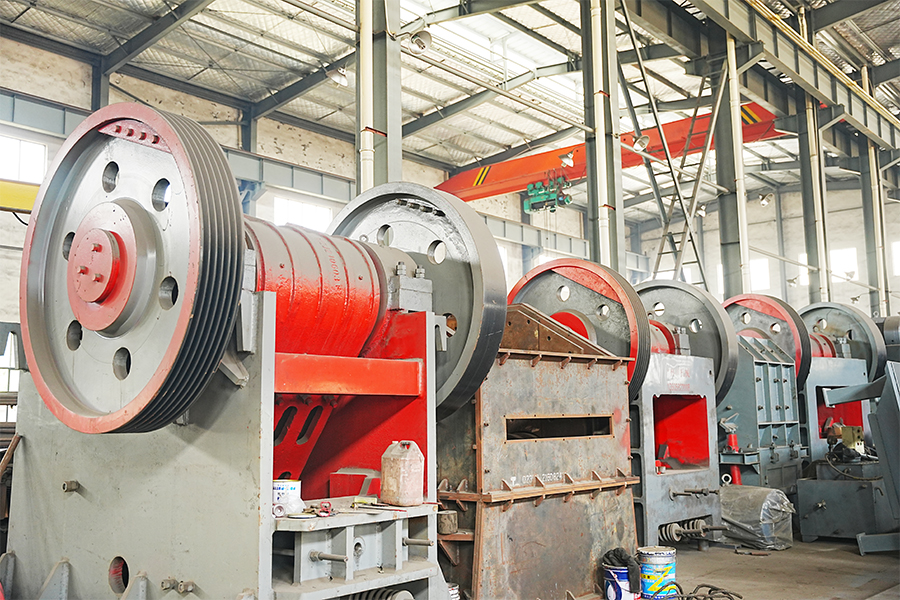
The basic concept is straightforward: large rock enters a primary crusher, the reduced material moves toward secondary crushing, and additional reduction may take place through tertiary or quaternary equipment. The exact arrangement depends on the feed size and required product.
Metso's crushing handbook gives an example of 400 mm feed being reduced to a 16 mm product. A total reduction ratio of 25:1 cannot normally be achieved through only two stages under the stated example, so a third stage becomes necessary.
| Material Condition | Typical Stage | Common Equipment | Primary Objective |
| Large blasted rock | Primary | Jaw / gyratory / primary impact | Accept large feed and create a manageable discharge |
| Medium crushed rock | Secondary | Cone / impact | Further size reduction |
| Smaller aggregate | Tertiary | Cone / impact / VSI | Produce tighter size fractions and shape |
| Fine feed | Quaternary | VSI / fine crusher | Additional reduction or particle shaping |
These stages are not fixed formulas. Some applications can operate with two stages, while finer products or larger reduction ratios may require three or more. Metso also notes that two- and three-stage circuits are common, with the required arrangement affected by rock type, feed size, desired end-product size, and product quality.
Primary crushing deals with the largest material entering the plant. Feed opening therefore becomes a critical specification. A crusher with a small intake cannot compensate for oversized feed simply through greater motor power.
Jaw crushers are widely used for primary crushing because their large feed openings can accept substantial rock pieces. Gyratory crushers also serve primary duties in large mining applications. Horizontal shaft impact crushers can cover primary, secondary, or tertiary duties depending on the material and configuration.
Our equipment planning starts with the actual feed dimensions rather than the desired final output alone. Consider a quarry receiving rock with a top size around 500–600 mm. The primary machine needs to accept this material while creating a discharge size suitable for the following crusher.
Secondary crushing takes the larger product created by the primary stage and reduces it further. Cone crushers are commonly used here, particularly with hard and abrasive rock. Impact crushers can also serve secondary duties, especially in applications where particle shape is an important consideration.
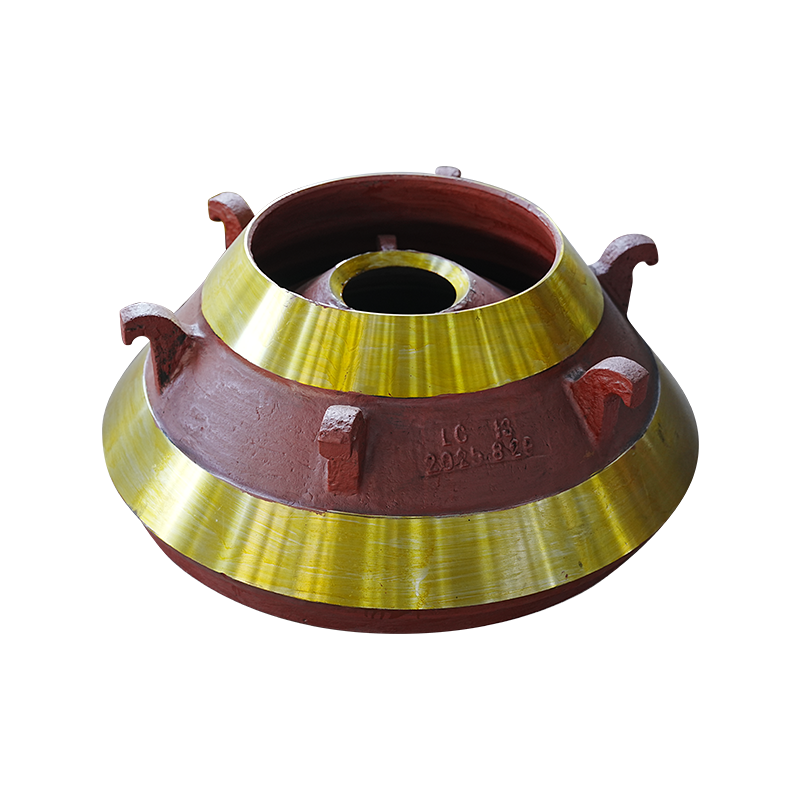
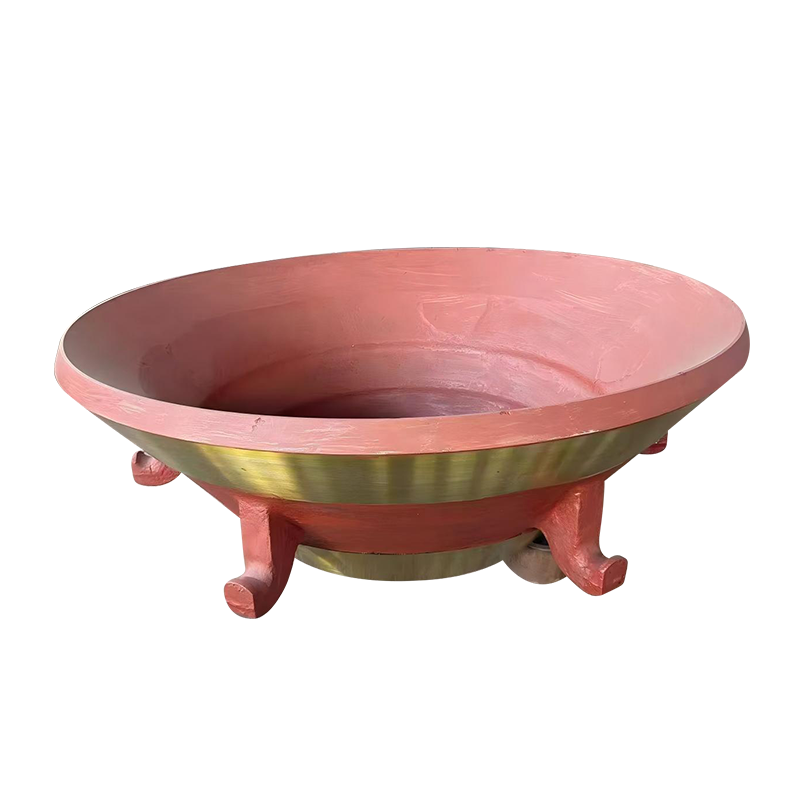
Our cone crusher products are designed around compression crushing, with mantle and concave components forming the working cavity. The relationship between feed size, chamber profile, CSS, and liner geometry determines how material moves through the crusher.
Consider a simplified circuit:
| Stage | Example Feed | Example Setting / Output Direction | Equipment Focus |
| Primary | 500 mm rock | Coarse discharge | Jaw crusher |
| Secondary | 100–150 mm feed | 30–50 mm range | Cone crusher |
| Tertiary | 30–50 mm feed | 8–20 mm range | Fine cone or impact crusher |
The figures above are an illustrative configuration rather than a universal specification. Actual output depends on crusher model, chamber, feed gradation, rock characteristics, CSS, eccentric throw, speed, and circuit design.
A single crusher can handle substantial size reduction, but every machine has a practical reduction range. Pushing too much reduction into one chamber can create an unfavorable relationship between feed size, discharge setting, capacity, and wear.
Metso's technical guidance identifies approximately 4:1 as a general maximum reduction ratio for an individual jaw or cone crusher in its example framework. A 16:1 overall reduction ratio can therefore be approached through two stages at roughly 4:1 per stage, while a 20:1 requirement may call for three stages under the same simplified calculation.
Actual plant design requires more detailed calculations. Still, the reduction-ratio concept provides a useful starting point:
Different crushers break rock through different mechanisms. Jaw crushers use compression between fixed and moving jaw plates. Cone crushers use compression between the mantle and concave. Impact crushers use high-speed impact from a rotor and impact surfaces. VSI equipment uses high-speed particle acceleration and rock-on-rock or rock-on-metal impact.
That difference matters because the required task changes along the circuit.
| Crusher Type | Typical Role | Material Size Direction | Notable Product Characteristic |
| Jaw Crusher | Primary | Large → medium | Strong compression crushing |
| Cone Crusher | Secondary / tertiary | Medium → smaller | Controlled compression and reduction |
| Impact Crusher | Primary / secondary / tertiary | Large or medium → smaller | Impact crushing and particle shaping |
| Hammer Crusher | Fine or intermediate crushing | Medium → fine | Repeated hammer impact |
| VSI Crusher | Tertiary / quaternary | Small → fine | Particle shaping and fine production |
Metso's published crusher-selection table illustrates this range: jaw and gyratory crushers commonly serve primary duties, cone crushers cover secondary and tertiary stages, while VSI machines are generally associated with tertiary or quaternary crushing and shaping.
Rock size tells us how much reduction is required, but rock characteristics tell us how the machine must perform that reduction. Granite, basalt, limestone, sandstone, and ore do not behave identically under compression or impact.
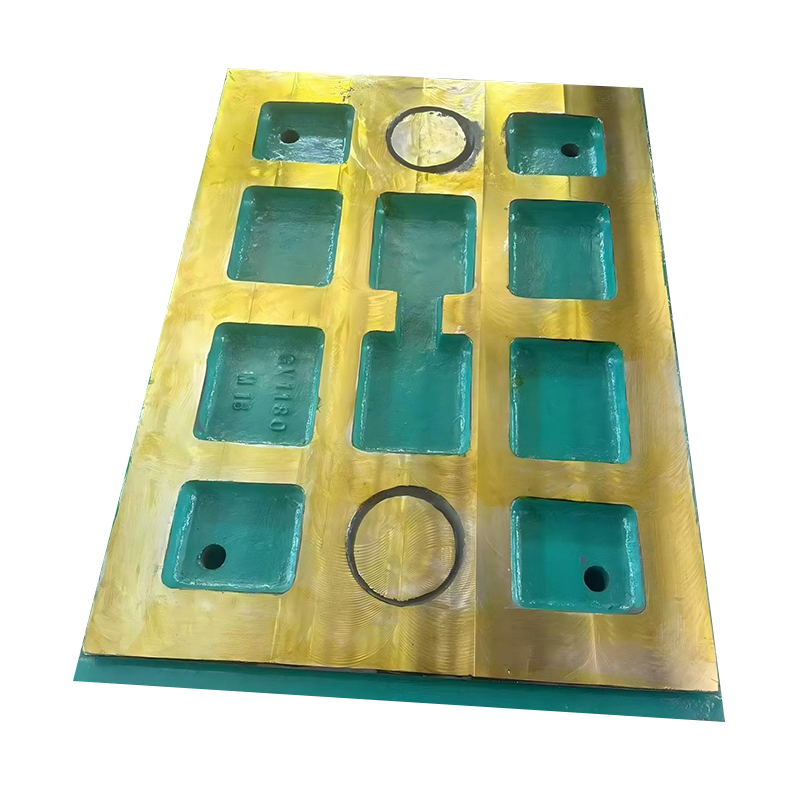
Hard and abrasive materials can place greater demands on jaw plates, cone liners, blow bars, impact plates, and hammer heads. Our own recent work with crusher spare parts focuses on the relationship between hardness, abrasiveness, feed size, and impact intensity.
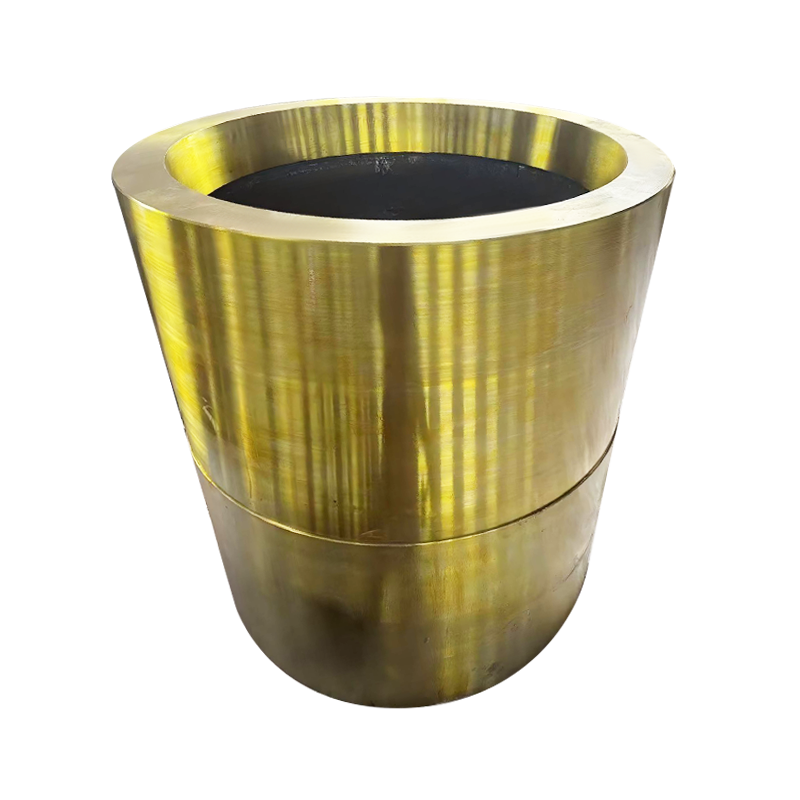
Our material range includes high manganese steel fittings and high chromium cast iron fittings. These materials can be applied to different wear conditions depending on the crusher and the feed material. Matching the casting specification to the crushing duty is part of our equipment and wear-part approach.
Our PC-type hammer crusher provides a practical example of staged size reduction. The product information describes a configuration where material passes through a jaw crusher for coarse crushing before entering the PC-type hammer crusher. The jaw stage reduces the rock to below approximately 300 mm, while the hammer crusher can further reduce material to approximately 10–50 mm before screening. The stated application includes limestone, sandstone, marl, rock, coal, and gypsum with compressive strength up to 200 MPa.
This configuration illustrates an important principle: the second crusher does not need to accept quarry-size rock because the first crusher has already changed the feed condition.
Such an arrangement can be easier to analyze than asking one machine to accept large feed and produce a fine final fraction simultaneously.
Crushing and screening should be considered together. A screen can separate material that has already reached the required size while returning oversized particles to another crushing stage. This prevents material that already meets the specification from repeatedly passing through a crusher.
A typical circuit may therefore look like:
Raw rock → Primary crusher → Screen → Secondary crusher → Screen → Tertiary crusher → Final screening
The exact flow changes according to product requirements. Some circuits use closed-loop operation, while others use separate stockpiles for different aggregate fractions.
We approach crusher equipment configuration by breaking the project into measurable material conditions. Rather than starting with a machine name, we begin with feed size, material type, capacity, required output, and crushing stage.
| Project Data | Equipment Question | Related Linchuan Products |
| Maximum feed size | Which crusher can accept the material? | Jaw / impact / related equipment |
| Target intermediate size | How much reduction belongs in the next stage? | Cone / impact / hammer crusher |
| Final product size | Is another reduction stage necessary? | Fine crushing equipment |
| Rock abrasiveness | Which wear material is appropriate? | Manganese / high-chrome castings |
| Equipment model | Which replacement components match? | Jaw plates / mantles / concaves / blow bars / hammers |
Linchuan operates from a 30-acre facility with more than 150 employees and more than 30 technical personnel, focusing on mining crushing, sand-making, and wear-resistant castings. Our product portfolio covers mining machinery as well as high manganese steel and high chromium cast iron components.
The answer starts with the distance between the feed size and the required product size. A relatively modest reduction may fit within one crusher, while a large reduction ratio usually becomes easier to manage through several stages. Rock hardness, abrasiveness, product shape, capacity, and screening requirements then refine the equipment combination.
Our role at Linchuan is to connect these material conditions with practical crushing equipment and wear components. A jaw crusher can handle the large starting point, a cone crusher can take the reduced material toward a tighter size range, while impact or hammer equipment can serve specific reduction and shaping requirements. Each stage has a defined job rather than forcing one machine to perform every task.
The useful question is not simply how many crushers a plant needs. It is how much rock-size reduction each machine should handle. Once feed size, intermediate size, final size, and material characteristics are mapped clearly, the equipment route becomes easier to define. That is the approach we use at Linchuan when developing crusher equipment and wear-part solutions for different rock-processing applications.
HOT PRODUCTS
interested?
Contact us!

No. 88 Wenbo Road, Jinxi Development Zone, Wucheng District, Jinhua City, Zhejiang Province, China

+86-18869925678
+86-13605822008

Mining Crushing & Sand-Making Manufacturer
 English
 中文简体
中文简体
 русский