
/ Contact Us
Zhejiang Linchuan Machinery Manufacturing Co., Ltd.
No. 88 Wenbo Road, Jinxi Development Zone, Wucheng District, Jinhua City, Zhejiang Province, China
+86-13605822008
2026-07-17
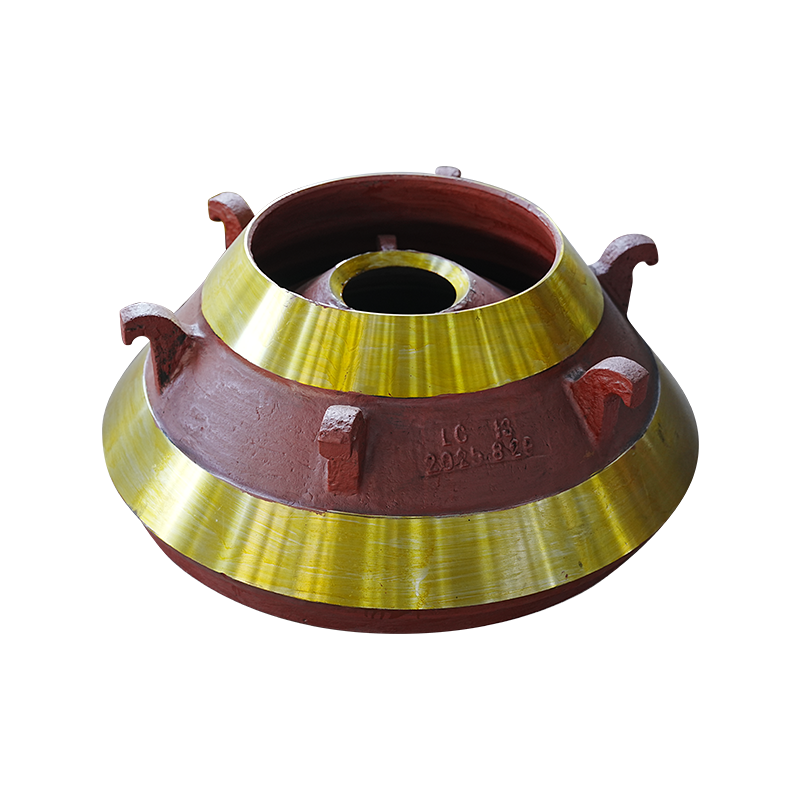
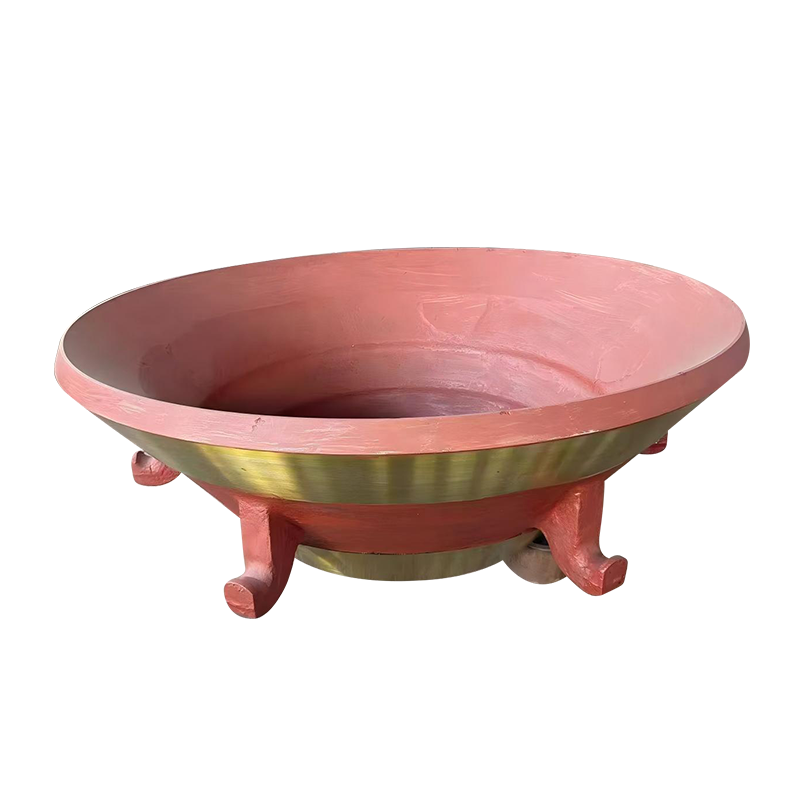
Recent field observations across aggregate and mining operations suggest that Cone Crusher Wall components are showing earlier-than-expected changes in wear geometry. Rather than uniform erosion, wear patterns are becoming increasingly asymmetric and profile-dependent, which directly affects chamber stability and product consistency.
These shifts are not simply about shorter service life. They point toward evolving feed characteristics, uneven chamber loading, and more aggressive compression cycles inside modern cone crushing systems.
Cone crusher walls, consisting of the mantle and concave, rely on a stable geometry to maintain controlled compression. Once wear deviates from the original profile, the crushing chamber begins to lose its designed shape.
Industry analysis shows that liner wear directly reshapes chamber geometry, which can degrade product gradation and reduce throughput efficiency over time.
Modern crushing circuits often process mixed feed streams with variable particle sizes and hardness levels. This creates uneven contact pressure across the cone crusher wall surface.
Uneven feed conditions are widely recognized as a major cause of irregular liner wear and reduced chamber life, especially when feed grading fluctuates significantly during operation.
One of the earliest indicators of cone wall degradation is subtle drift in output particle size distribution. Even before visible liner thinning becomes critical, chamber geometry changes begin affecting crushing behavior.
Once liner profiles deviate beyond designed tolerances, even small adjustments in CSS cannot fully restore original crushing performance.
Wear is increasingly observed to develop in distinct stress concentration zones rather than spreading evenly across the liner surface. These zones correlate strongly with feed trajectory and rotational motion patterns.
Research on cone crusher liners indicates that uneven wear can increase stress concentration within the crusher structure, raising the risk of mechanical fatigue in supporting components.
Rather than relying only on physical thickness measurements, operators increasingly monitor performance signals to identify early replacement needs for cone crusher walls.
These indicators often appear before critical wear thresholds are reached, making them valuable for planned maintenance scheduling.
Recent developments in liner technology focus on improving wear uniformity rather than extending raw hardness alone. This shift addresses the root cause of early replacement signals.
These innovations aim to stabilize wear progression and maintain chamber geometry for longer operational cycles under variable feed conditions.
The wear behavior of Cone Crusher Wall components is becoming more dynamic due to changing feed materials and higher operational demands. Instead of predictable linear wear, operators are now dealing with profile distortion, localized stress concentration, and early performance drift.
Understanding these evolving wear patterns allows maintenance planning to shift from reactive replacement toward condition-based monitoring, improving stability across the entire crushing circuit.
HOT PRODUCTS
interested?
Contact us!

No. 88 Wenbo Road, Jinxi Development Zone, Wucheng District, Jinhua City, Zhejiang Province, China

+86-18869925678
+86-13605822008

Mining Crushing & Sand-Making Manufacturer
 English
 中文简体
中文简体
 русский