
/ Contact Us
Zhejiang Linchuan Machinery Manufacturing Co., Ltd.
No. 88 Wenbo Road, Jinxi Development Zone, Wucheng District, Jinhua City, Zhejiang Province, China
+86-13605822008
2026-11-06
Crushing plant upgrades involve more than replacing an aging machine with a newer model. Changes in raw material supply, production targets, aggregate specifications, and operating expenses can all influence equipment requirements. At Zhejiang Linchuan Machinery Manufacturing Co., Ltd., we understand that quarry operators and mining businesses need to evaluate these factors before investing in new crushing equipment.
An impact hammer crusher can be a practical option for operations that require effective material reduction, controlled discharge sizes, and a production process suited to impact-based crushing. However, upgrading equipment without reviewing the existing production conditions may create new operational challenges. Our engineering approach focuses on matching crushing equipment with actual site requirements rather than relying on equipment specifications alone.
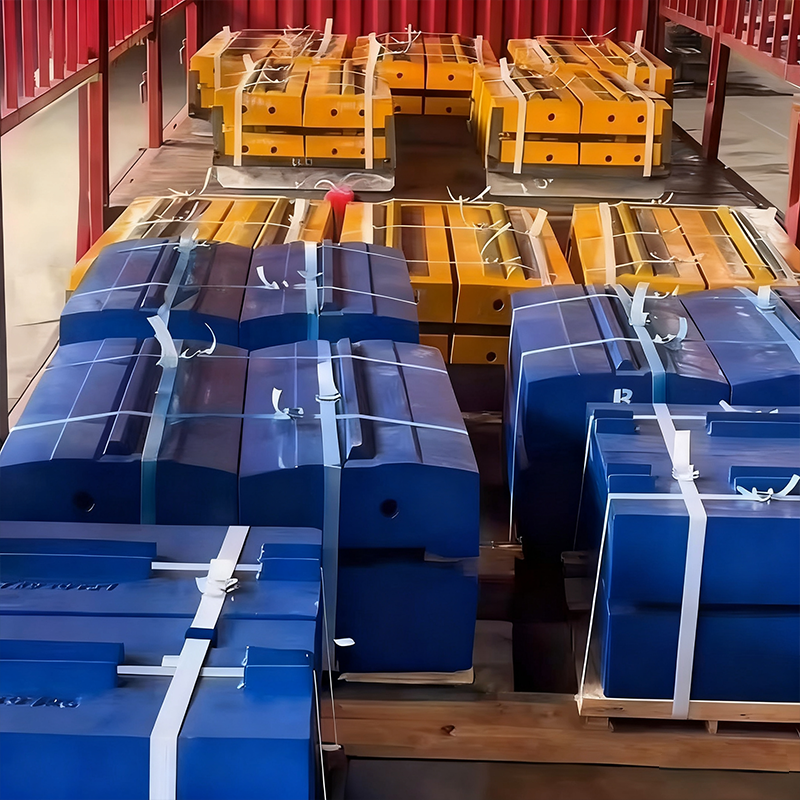
Equipment replacement should begin with an assessment of current production performance. An existing crushing line may still operate, but recurring problems can indicate that its configuration no longer matches the production requirements.
At Linchuan, we recommend reviewing several operational indicators before considering an upgrade:
These issues should be recorded using actual operating data. Daily output, downtime records, electricity consumption, and maintenance expenses provide a useful reference for evaluating whether an impact hammer crusher upgrade is economically reasonable.
Raw material characteristics have a direct influence on crushing performance and component wear. An impact-based crushing system uses rotating hammers or impact components to transfer energy to incoming materials. The material then breaks through repeated collisions with internal impact surfaces.
This working principle can support the processing of limestone, sandstone, gypsum, marl, coal, and certain other materials. However, rock hardness and abrasiveness should be evaluated before equipment configuration is finalized.
Our team at Linchuan considers these factors during equipment discussions. A crushing solution designed around limestone processing, for example, may require different wear-resistant components from a configuration intended for more abrasive mineral materials.
Upgrading to an impact hammer crusher should support the required production volume without creating unnecessary pressure on other processing equipment. A crusher with a high rated capacity cannot guarantee the same output under every operating condition.
Actual production depends on several interacting variables, including feed size, material properties, rotor configuration, motor power, discharge settings, and feeding stability.
Our PC-type hammer crusher range provides an example of how different equipment specifications correspond to different production requirements. The published model specifications include:
| Technical Parameter | PC650 | PC800 | PC900 |
| Feed Size (mm) | Less than 200 | Less than 300 | Less than 300 |
| Discharge Size (mm) | 0–50 | 0–50 | 0–50 |
| Production Capacity (t/h) | 80–100 | 120–150 | 150–200 |
| Motor Power (kW) | 110 | 160 | 250 |
These figures provide a reference for comparing model configurations, rather than a guaranteed production result for every material. Actual performance should be confirmed according to feed characteristics, operating conditions, and project requirements.
Our recommendation is to compare the required hourly output with the existing feeder, conveyor, and screening capacities. This prevents a situation where an upgraded crusher processes material faster than the rest of the production line can handle.
Finished material specifications are another important consideration during a crushing plant upgrade. Construction aggregate suppliers, cement producers, and sand-making businesses may have different requirements for particle size distribution and material shape.
An impact hammer crusher uses repeated impact forces to break incoming rocks. This crushing action can produce relatively uniform particles and cubic-shaped aggregates under suitable operating conditions. The actual results depend on the raw material, equipment structure, rotor speed, and discharge arrangement.
Before investing in an upgraded machine, buyers should establish measurable product requirements. These may include the target particle-size range, allowable fines content, aggregate shape expectations, and daily production volume.
At Linchuan, we encourage customers to provide their finished material specifications during technical discussions. This allows our team to assess equipment compatibility with the intended production process.
Purchase price represents only part of the investment involved in crushing equipment. Hammers, impact liners, side plates, and other internal components experience continuous mechanical stress during operation. Their service life can influence maintenance frequency, production availability, and operating expenses.
For businesses considering an impact hammer crusher upgrade, wear-part management should be included in the equipment evaluation.
As a manufacturer specializing in mining crushing equipment and wear-resistant castings, Linchuan provides high-manganese steel fittings, high-chromium cast iron fittings, and crushing machinery solutions. We pay attention to the relationship between equipment configuration and wear-part requirements because both influence the operating cost of a crushing line.
A crusher upgrade rarely operates as an isolated project. The new equipment must work with the existing material handling and processing arrangements. Ignoring these connections may create installation difficulties or reduce the expected production benefits.
Before confirming an equipment upgrade, we suggest reviewing the following technical details:
Some production lines may only require the replacement of a single crushing unit, while others may benefit from adjustments to feeding, screening, or conveying equipment. Our engineering team considers the overall arrangement to help customers avoid unnecessary modifications.
Equipment investment should be assessed against the expected operating benefits. A higher-capacity crusher may appear attractive on paper, but the financial result also depends on installation expenses, power consumption, wear-part costs, maintenance labor, and production interruptions during replacement.
We recommend organizing the upgrade budget around several cost categories:
A structured implementation plan also helps coordinate equipment delivery, site preparation, installation personnel, and spare-part arrangements. Businesses should establish acceptance criteria covering operating stability, processing capacity, and finished material specifications before commissioning begins.
Equipment specifications provide an important starting point, but technical communication and manufacturing experience also matter during an upgrade project. Buyers need a supplier capable of understanding material conditions, reviewing equipment requirements, and discussing suitable machinery and wear-resistant components.
At Zhejiang Linchuan Machinery Manufacturing Co., Ltd., we specialize in mining crushing, sand-making equipment, and wear-resistant castings. Our manufacturing operations cover a 30-acre facility, supported by a workforce of approximately 150 employees and dedicated technical personnel.
Our product range includes PC-type hammer crushers, impact crushing equipment, industrial rock crushers, jaw crusher parts, hammer crusher spare parts, and high-manganese and high-chromium castings.
We approach customer projects through several practical steps:
This approach helps us provide equipment recommendations based on measurable production requirements rather than relying on general equipment descriptions.
An impact hammer crusher upgrade deserves consideration when an existing crushing line struggles with processing capacity, product consistency, maintenance expenses, or changing material requirements. However, the investment should be supported by a complete review of raw material characteristics, equipment compatibility, finished product specifications, and long-term operating costs.
At Linchuan, we believe that successful crushing equipment upgrades begin with accurate technical information and practical project planning. Providing details such as material type, feed size, required output, existing equipment model, and target particle size helps us understand your application more clearly.
Planning to improve your crushing production line? Contact Zhejiang Linchuan Machinery Manufacturing Co., Ltd. to discuss your equipment requirements, wear-resistant component needs, and potential crushing system upgrades. Our team is ready to work with your project specifications and explore a suitable technical solution.
HOT PRODUCTS
interested?
Contact us!

No. 88 Wenbo Road, Jinxi Development Zone, Wucheng District, Jinhua City, Zhejiang Province, China

+86-18869925678
+86-13605822008

Mining Crushing & Sand-Making Manufacturer
 English
 中文简体
 русский