What Types of Stones or Minerals Are Suitable for a Sand Making Machine?
Selecting the appropriate materials for processing is critical to achieving efficient and consistent sand production. A Sand Making Machine is designed to handle a wide range of rocks and minerals, but understanding its operational limits helps optimize performance.
Materials like granite, basalt, and quartz are ideal for sand-making machines. These rocks are very hard, and the machine’s impact-resistant components and robust frame allow them to be broken down into fine, uniform sand suitable for construction or concrete applications.
Limestone, sandstone, and river pebbles are also suitable. Their moderate hardness reduces wear on machine components while still allowing the production of high-quality sand. Proper calibration ensures breakage beyond the desired size.
Minerals such as iron ore, copper ore, and other moderately abrasive materials can be processed. Selecting the correct wear-resistant parts and performing regular maintenance prolongs machine life and maintains production efficiency.
- Precautions for Fragile Materials
Soft, friable rocks or materials with high moisture content may generate excessive fines or dust during crushing. Adjusting feed size, rotor speed, and machine settings can prevent over-crushing and ensure consistent output.
What Types of Stones or Minerals Are Suitable for a Hammer Sand Making Machine?
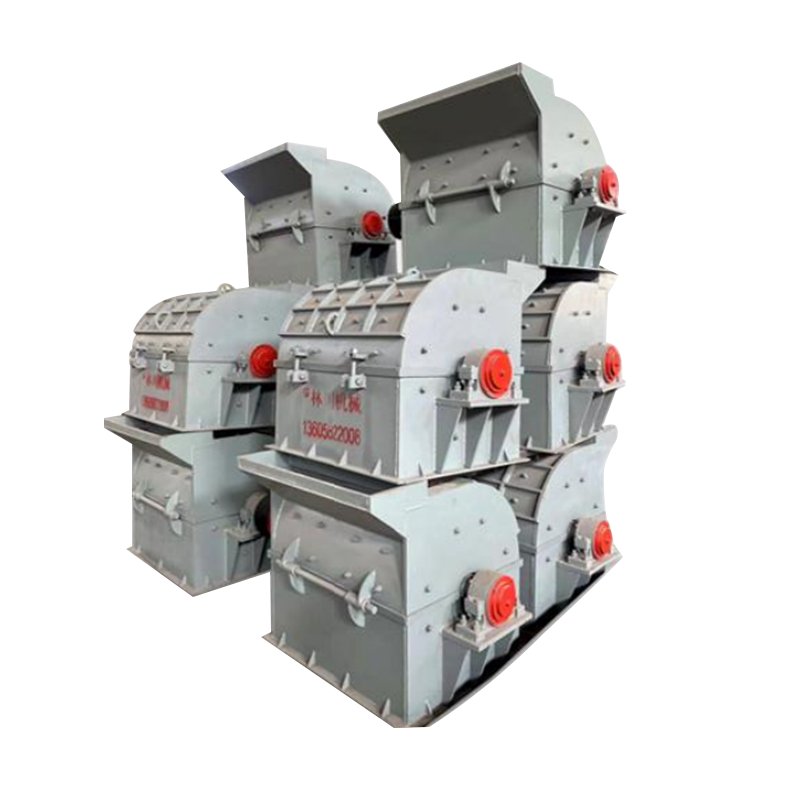
The Hammer Sand Making Machine specializes in producing medium to fine sand using high-speed impact crushing. Its design makes it particularly effective for certain types of stones and minerals.
1. Medium-Hard Rocks
Limestone, dolomite, and medium-hard sandstone are ideal for hammer sand-making machines. The rotor and hammer design delivers high-impact energy to efficiently break these materials into sand.
2. Relatively Hard Rocks
Granite and basalt can also be processed with a hammer sand making machine. However, operators must monitor hammer wear carefully because extremely hard rocks increase abrasion, which may require more frequent part replacements.
3. Abrasive Minerals
Materials such as iron ore, manganese ore, and other moderately abrasive minerals can be crushed efficiently if the machine is equipped with high-quality, wear-resistant hammers. Regular inspection ensures consistent performance and prolongs machine life.
4. Limitations for Soft or Clay-Containing Rocks
Hammer sand-making machines may produce excessive fines or irregular shapes when processing soft rocks or clay-rich materials. Proper feed rate control and rotor speed adjustments help maintain particle size and reduce dust.
How Can an Artificial Sand Making Machine Produce Ideal Sand Particle Shape?
Producing high-quality artificial sand with a uniform shape is critical for construction and concrete applications. Artificial Sand Making Machine uses controlled crushing techniques to achieve the desired sand properties.
- Adjusting Crusher Settings
The distance between the rotor and impact plates, as well as rotor speed, significantly influences particle shape. Proper calibration produces cubic, angular particles suitable for concrete and mortar.
Utilizing primary and secondary crushing stages improves particle uniformity. The stage reduces material size, while the second stage refines particle shape and eliminates elongated fragments.
- Screening and Classification
Vibrating screens or classifiers help separate materials according to size. This ensures that only properly sized particles proceed to the final product, producing consistent sand with flaky or elongated particles.
Worn hammers, liners, or impact plates can reduce crushing efficiency and cause irregular particle shapes. Timely replacement of these components maintains sand quality and production efficiency.
Selecting suitable feed material with proper hardness and low moisture content is essential. Soft or overly wet materials may generate excessive fines or irregular shapes, so feed preparation is critical for ideal sand production.
By carefully selecting the correct stones for a Sand Making Machine, optimizing feed for a Hammer Sand Making Machine, and adjusting settings on an Artificial Sand Making Machine, operators can produce high-quality sand with consistent particle size and shape while ensuring efficient, durable, and cost-effective operation.

 English