
/ Contact Us
Zhejiang Linchuan Machinery Manufacturing Co., Ltd.
No. 88 Wenbo Road, Jinxi Development Zone, Wucheng District, Jinhua City, Zhejiang Province, China
+86-13605822008
2026-07-03
The crushing industry is entering a phase where raw material characteristics are shifting faster than equipment upgrade cycles. Ore bodies with higher silica content, recycled aggregates mixed with debris, and irregular feed gradation are placing new pressure on wear parts across Crushing Machinery And Accessories. Abrasive intensity is no longer stable across a single production line, which means component durability, geometry stability, and wear resistance behavior are becoming critical decision points.
Abrasive feed not only increases wear speed; it reshapes how wear develops on metal surfaces. Modern crushing systems experience a combination of sliding abrasion, impact fatigue, and localized gouging across liner surfaces.
Research on cone crusher liner systems shows that abrasive wear dominates in high-silica ores such as granite and basalt, gradually altering chamber geometry and affecting product consistency.
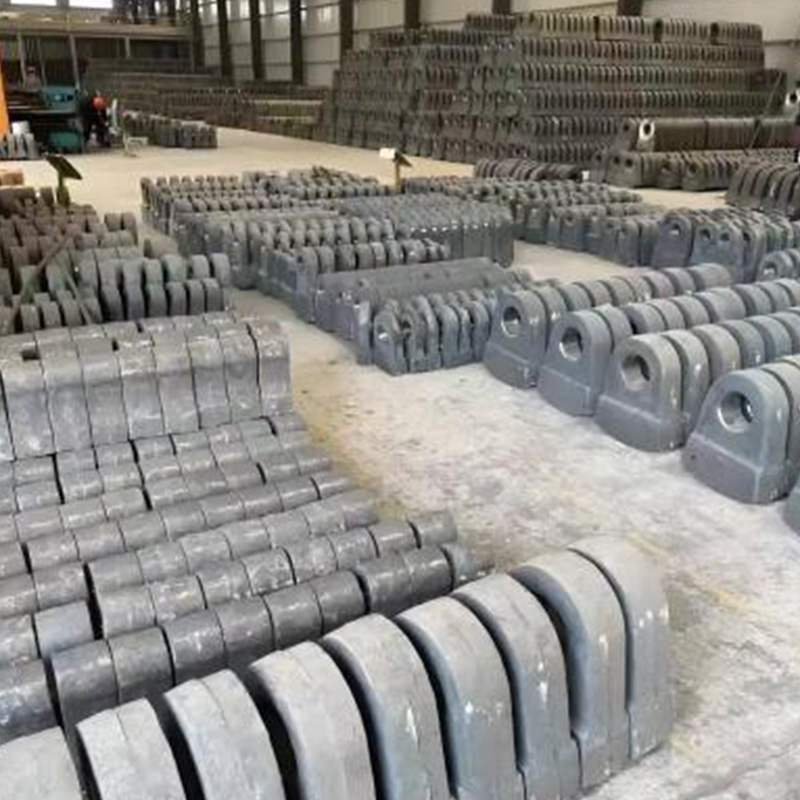
High-manganese hammerheads remain widely used due to work-hardening capability, yet high-abrasive feed introduces uneven stress distribution across strike faces.
In heavy-duty conditions, manganese grades such as Mn18Cr2 show improved resistance due to stronger work-hardening response, though performance still depends heavily on impact energy balance.
Hammerhead wear is no longer purely linear. Wear maps now show asymmetric erosion, especially under mixed feed conditions combining rock and recycled aggregates.
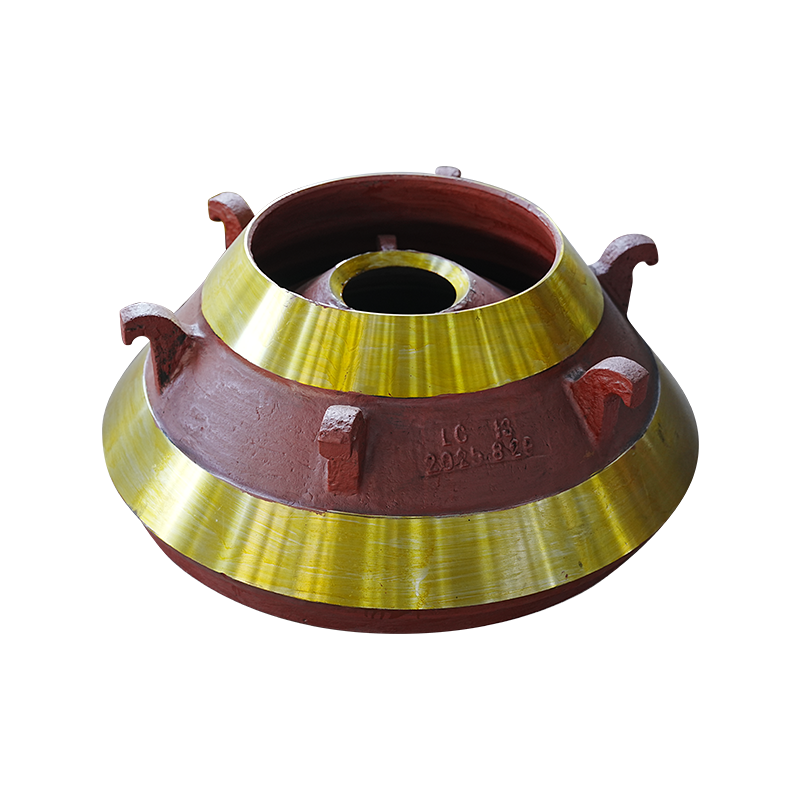
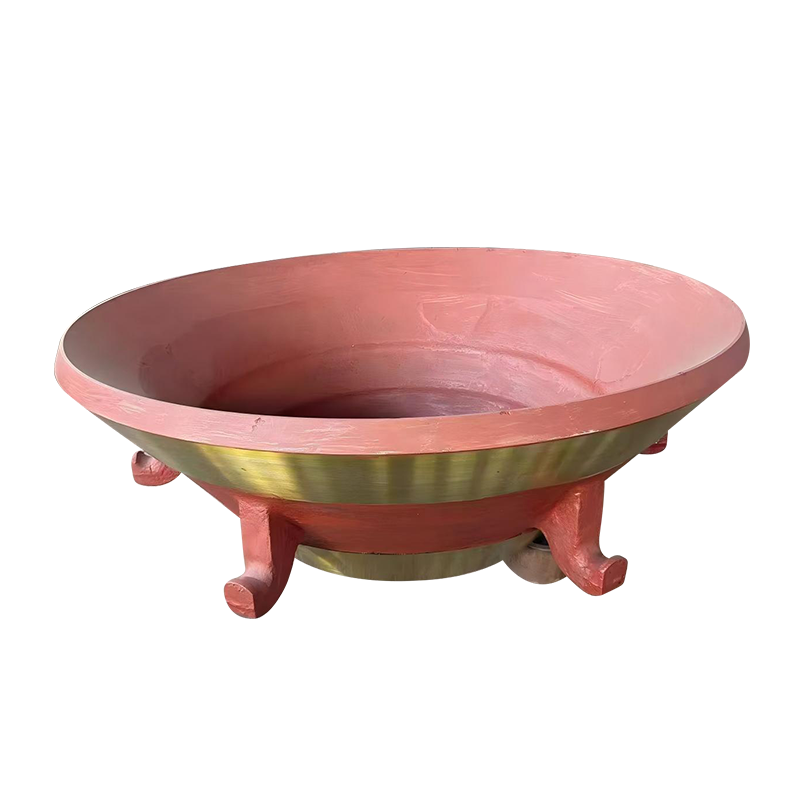
Cone crusher walls (concaves and mantles) operate under continuous compression, making them highly sensitive to feed abrasiveness. As material hardness rises, pressure distribution becomes less uniform across the crushing chamber.
Studies indicate that liner geometry changes directly influence crusher performance, as wear modifies the crushing chamber shape and pressure response behavior.
In high-abrasive applications, cone walls may lose profile symmetry earlier than expected, especially when feed includes angular quartz or recycled concrete fragments.
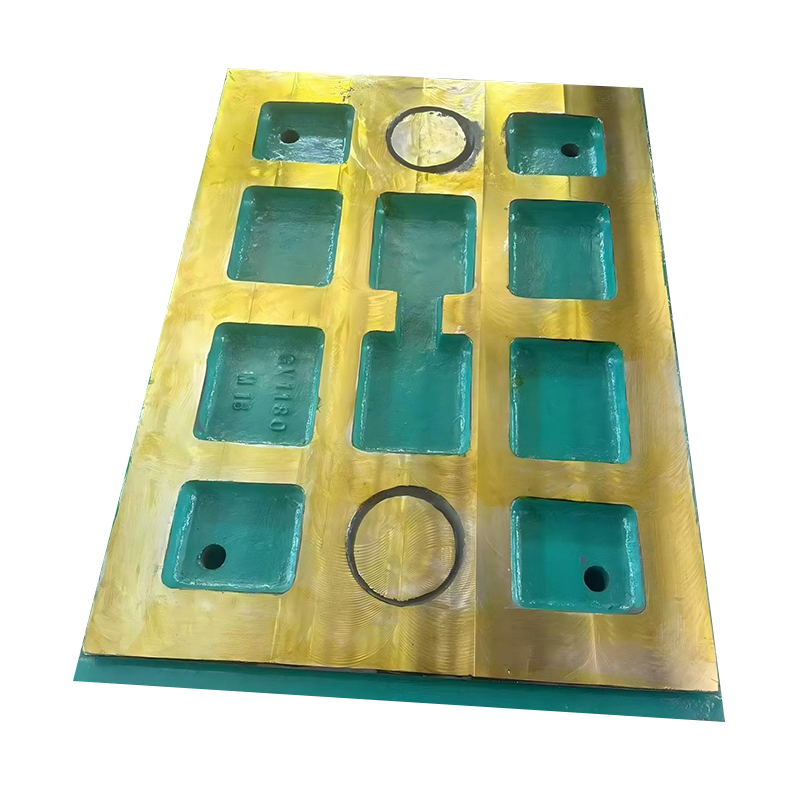
Toothed plates experience a unique combination of shearing and compression forces. High-abrasive feed introduces irregular contact patterns that reduce uniform tooth engagement.
As wear progresses, crushing efficiency shifts from cutting-dominant action to compression-dominant behavior, altering downstream particle size distribution.
Impact liner plates are directly exposed to high-velocity particle strikes, making them sensitive to feed hardness spikes and sudden abrasiveness changes.
Modern impact systems show that wear is not uniform across the plate surface. The leading strike area can reach critical wear depth significantly earlier than peripheral zones, especially in abrasive rock environments.
Improvement in wear resistance is no longer dependent on single alloy upgrades. It now involves multi-layer design, optimized hardness gradients, and geometry-tuned profiles.
Material selection is increasingly tied to feed profiling rather than generic application categories, reflecting the variability of modern crushing environments.
Field data from aggregate operations indicates that wear cycles shorten significantly under high-silica feed streams. This creates a cascading effect across production lines, where liner replacement timing, crusher calibration, and output quality become tightly interconnected.
Crusher operators are now required to monitor wear not only through physical inspection but also through performance indicators such as power draw fluctuation, particle shape deviation, and discharge consistency.
High-abrasive feed conditions are redefining performance expectations across Crushing Machinery And Accessories. Hammerheads, cone walls, toothed plates, and impact liners are no longer evaluated solely by lifespan, but also by how stable they keep crushing geometry under stress variation.
The next evolution in crushing systems will likely focus on adaptive wear surfaces and predictive wear mapping rather than static material upgrades, reshaping how durability is defined in real production environments.
HOT PRODUCTS
interested?
Contact us!

No. 88 Wenbo Road, Jinxi Development Zone, Wucheng District, Jinhua City, Zhejiang Province, China

+86-18869925678
+86-13605822008

Mining Crushing & Sand-Making Manufacturer
 English
 中文简体
中文简体
 русский