
/ Contact Us
Zhejiang Linchuan Machinery Manufacturing Co., Ltd.
No. 88 Wenbo Road, Jinxi Development Zone, Wucheng District, Jinhua City, Zhejiang Province, China
+86-13605822008
2026-06-05
Crushing systems used in mining, aggregates, and mineral processing rely heavily on wear parts that absorb repeated impact and abrasion. Components such as liners, hammers, and fittings operate under extreme mechanical stress cycles. Failures rarely appear without warning signs, yet they are often misunderstood as random events. Industry studies on wear mechanisms show that more than 80% of early damage originates from abrasive particle interaction and load imbalance inside the crushing chamber.
Crushing Machinery And Accessories are designed to tolerate harsh working environments, but structural integrity depends on material grade, feed characteristics, and operational stability. A closer look at failure patterns reveals that cracking and sudden fracture are closely linked to microstructural defects, improper alloy matching, and uneven force distribution during impact cycles.
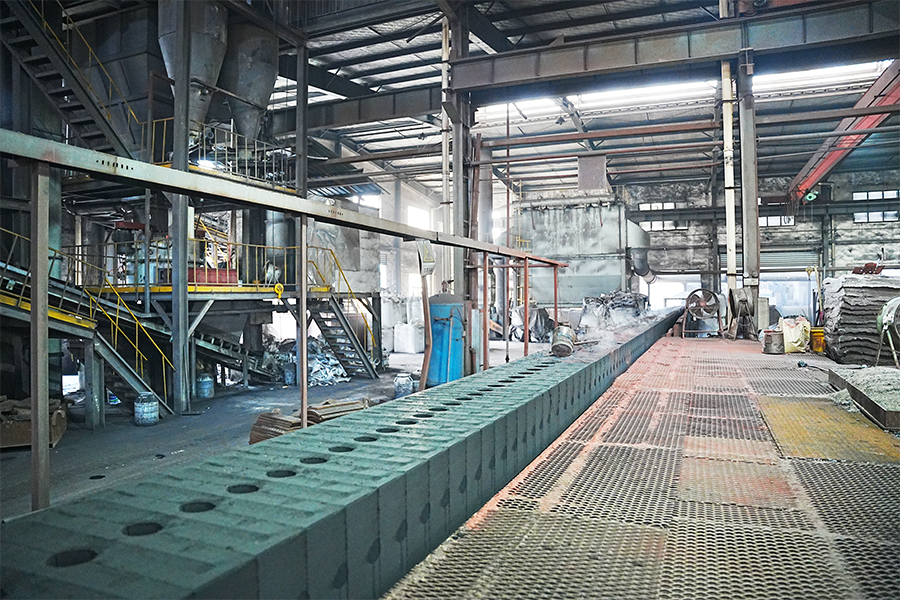
Crushing equipment does not distribute force evenly. High-speed compression and repeated shock loading create localized stress zones on wear parts.
Under these conditions, micro-cracks may initiate within the surface layer and gradually extend inward. Once crack propagation reaches a critical depth, component failure accelerates rapidly.
Operational instability such as irregular feed or mixed material hardness increases this effect. Even small deviations in particle size distribution can shift load balance and intensify stress concentration.
Wear-resistant alloys used in crushing accessories include manganese steel, alloy steel, and high-chromium cast iron. Each material responds differently under repeated impact cycles.
High manganese steel is known for work hardening, yet improper heat treatment can leave internal stress zones. High Chromium Cast Iron Fittings provide strong abrasion resistance, though brittleness under high shock load remains a concern. Microstructural voids, carbide segregation, and casting porosity are common contributors to unexpected fracture.
Key technical parameters influencing reliability:
Small inconsistencies during casting or cooling can create weak interfaces where cracks begin under cyclic loading.
High Chromium Cast Iron Fittings are widely used in abrasive crushing environments such as quartz, granite, and iron ore processing. Their microstructure contains hard carbides embedded in a martensitic matrix, providing excellent wear resistance.
However, operational data indicates several failure patterns:
These issues are not always related to material quality alone. Feed contamination, oversized rocks, and inconsistent rotor speed can dramatically increase stress beyond design limits. Once impact energy exceeds the toughness threshold, fracture behavior shifts from gradual wear to brittle breakage.
Cracking risk is not limited to material selection. Mechanical design and operational alignment play equally important roles.
Even minor deviations in alignment can amplify vibration amplitude. Over time, repetitive vibration contributes to fatigue cracking at mounting points and stress transition zones.
Field observations show that components rarely fail in isolation. Instead, failure often begins in one section and spreads through connected accessories due to dynamic imbalance.
High-Chromium Hammerheads operate under continuous high-velocity impact. Their performance depends on carbide density and matrix toughness balance.
Typical operating conditions:
Although wear resistance is strong, brittle fracture may occur under sudden overload conditions. This includes tramp iron entry, uneven feed surges, or excessive moisture causing material clogging and rebound impacts.
A key observation in failure analysis is that crack initiation often starts at casting pores or sharp internal geometry transitions, then expands under repeated shock cycles.
Early detection plays a major role in preventing catastrophic breakdowns. Several physical indicators appear before full fracture:
These signals usually indicate internal fatigue accumulation rather than immediate surface wear. Monitoring these changes helps reduce unexpected downtime and secondary damage to adjacent components.
HOT PRODUCTS
interested?
Contact us!

No. 88 Wenbo Road, Jinxi Development Zone, Wucheng District, Jinhua City, Zhejiang Province, China

+86-18869925678
+86-13605822008

Mining Crushing & Sand-Making Manufacturer
 English
 中文简体
中文简体
 русский