
/ Contact Us
Zhejiang Linchuan Machinery Manufacturing Co., Ltd.
No. 88 Wenbo Road, Jinxi Development Zone, Wucheng District, Jinhua City, Zhejiang Province, China
+86-13605822008
2026-09-22
Granite, limestone, basalt, iron ore, quartzite, and recycled concrete can all pass through crushing equipment, yet they do not create the same working conditions. Some materials place greater emphasis on abrasion resistance, while others generate repeated impact loads. Large feed can create another type of stress, and mixed material may combine several wear mechanisms inside the same crusher.
At Linchuan, we therefore do not treat rock crusher parts as universal components. Our approach considers the rock type, feed size, abrasiveness, impact intensity, crushing stage, crusher model, and expected wear pattern before discussing an alloy or casting specification.
Our product portfolio covers high manganese steel fittings, high chromium cast iron fittings, cone crusher spare parts, impact crusher spare parts, hammer crusher spare parts, and jaw crusher parts. This range gives us a practical basis for matching different casting materials with different crushing conditions.
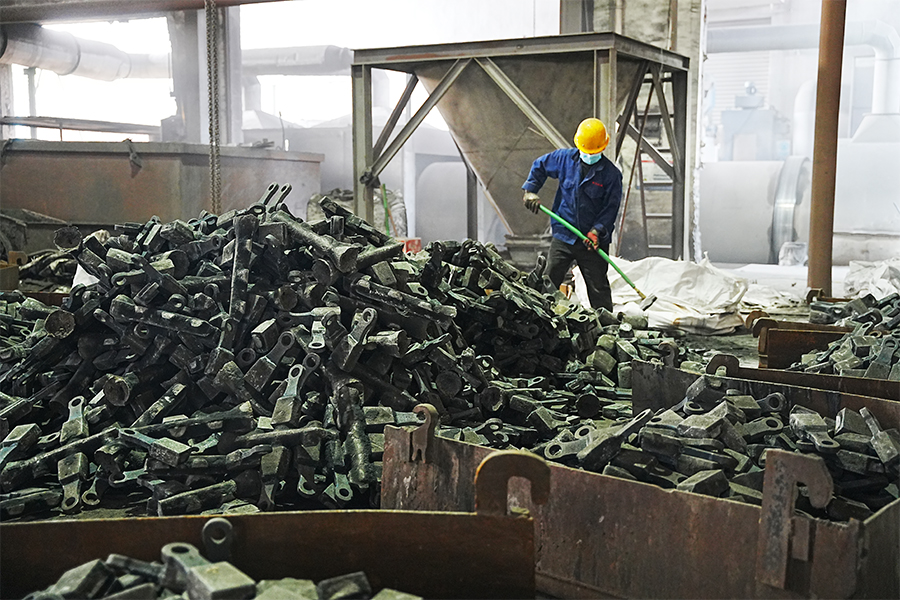
It is tempting to assume that harder rock simply requires harder crusher parts. Actual crushing conditions are more complicated. Hardness describes the resistance of the rock itself, but wear on a crusher component also depends on how the material contacts the working surface.
A large granite block can create a substantial impact load before sliding across a jaw plate or liner. Fine quartz-rich particles may produce continuous abrasive contact without generating the same level of impact. Both materials can be highly demanding, but the suitable material balance for the wear component may be different.
| Rock / Feed Condition | Dominant Concern | Material Direction to Consider |
| Limestone | Moderate impact and abrasion | Manganese or application-specific alloy |
| Granite | Hardness, abrasion, impact | Tough manganese or alloyed wear material |
| Basalt | Hard and abrasive feed | Manganese or specialized alloy system |
| Iron ore | Strong abrasive action | High-chrome or abrasion-oriented alloy where suitable |
| Quartz-rich rock | Severe abrasion | High-abrasion material configuration |
| Recycled concrete | Impact plus uncrushable steel | Toughness becomes particularly important |
Metso's mineral-processing guidance similarly separates wear mechanisms such as compression, high-velocity impact, low-velocity impact, and sliding abrasion. It describes manganese steel as suitable for applications involving substantial compression and impact, while high-chrome white iron is associated with abrasive wear but has limitations under heavy impact.
High manganese steel has a distinctive characteristic: its surface can work-harden under repeated impact. The material can therefore combine a relatively tough internal structure with a harder working surface after exposure to crushing forces.
This behavior makes manganese an important material for jaw plates, cone crusher liners, and other components exposed to compression and impact. Metso's technical material describes manganese steel as a standard choice for compression wear and notes that successful work hardening depends on sufficient impact energy.
Our own product range includes multiple manganese-based crusher components. We consider the actual application rather than assuming that a higher manganese percentage automatically provides a better result.
The actual chemistry, heat treatment, casting quality, crusher design, feed size, and operating conditions all influence performance. A grade number alone cannot predict service life across every application.
High chromium cast iron relies on hard chromium carbides within its microstructure to provide strong resistance against abrasive wear. This makes high-chrome materials attractive for applications dominated by abrasion and controlled impact.
Our high chromium cast iron product range includes blow bars and hammer heads designed around abrasive crushing applications. High-chrome materials can offer high surface hardness, but their lower tolerance for severe impact means the feed and crusher conditions need to be considered carefully.
Metso's mineral-processing handbook describes high-chrome white iron as an abrasion-oriented material and specifically notes its limitations under heavy compression or impact.
| Material System | Strength | Condition Requiring Attention |
| High manganese steel | Impact toughness and work hardening | Low-impact sliding abrasion may not activate sufficient work hardening |
| High chromium cast iron | Strong abrasion resistance | Heavy impact or tramp material can increase breakage risk |
| Martensitic alloy steel | Balance of hardness and toughness | Specification needs to match the application |
| Composite / specialized material | Can combine different wear properties | Application-specific design and manufacturing |
Granite combines relatively high hardness with abrasive mineral content. Large blasted granite also creates substantial impact loads inside primary and secondary crushers. That combination means the wear component needs to tolerate both mechanical shock and surface abrasion.
Jaw plates working with granite may experience concentrated impact around the feed zone. Cone crusher mantles and concaves can experience continuous compression and abrasion. Impact crusher blow bars face repeated high-speed contact with incoming rock.
Our recent technical analysis of harder ores highlights this distinction. Hard ore can change not only the rate of wear but also the location and pattern of material loss. Uneven wear can gradually change the original crushing profile, potentially affecting finished product size.
Limestone is generally less abrasive than granite or quartz-rich rock, although actual characteristics vary substantially between deposits. Its lower hardness can create different wear conditions, especially in equipment handling smaller feed sizes.
Such applications can allow manganese components to develop useful work-hardening behavior under sufficient impact. Extremely abrasion-focused alloys may not provide the same practical value in every limestone application because material cost, toughness, crusher configuration, and actual wear rate also matter.
Our recommendation is to examine the wear mechanism rather than assigning an alloy based solely on the word “limestone.” Two limestone quarries can produce noticeably different feed conditions.
Iron ore can contain highly abrasive mineral components. Wear surfaces exposed to continuous contact may lose material rapidly, particularly during secondary and tertiary crushing.
High-chrome materials can become relevant under these conditions because their hard carbide structure provides strong abrasion resistance. Yet feed size remains important. A high-chrome blow bar processing controlled abrasive feed operates under a different condition from the same component receiving large rocks or uncrushable metal.
Our high-chrome cast iron fittings are developed around such application differences. We discuss the crusher model, feed size, rock characteristics, and expected impact conditions before recommending a material specification.
Recycled concrete may contain reinforcing steel, bolts, wire, and other uncrushable objects. The rock itself may not be as abrasive as quartz-rich ore, but unexpected metal can produce sharp impact loads.
That changes the material priority. A very hard but relatively brittle wear alloy may offer strong abrasion resistance under controlled feed yet become vulnerable to sudden impact from tramp metal.
This principle applies across rock crusher parts, particularly blow bars, hammer heads, jaw plates, and cone crusher liners.
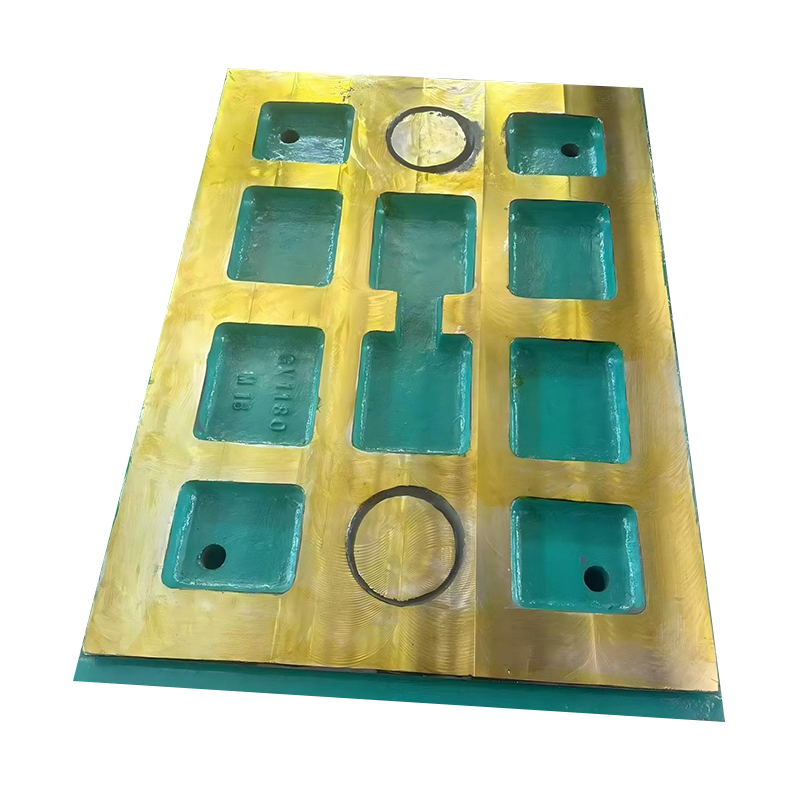
Jaw crusher wear parts operate under compression and repeated mechanical impact. The jaw profile also changes how material enters and moves through the crushing chamber.
Metso's jaw wear-part documentation demonstrates that different jaw profiles and alloys are associated with different feed conditions. Its application guide distinguishes standard profiles for gravel and non-abrasive rock from quarry profiles intended for abrasive or blasted rock.
That example shows why alloy and geometry should not be separated. A material change without considering tooth profile, feed distribution, and crusher setting may not produce the expected result.
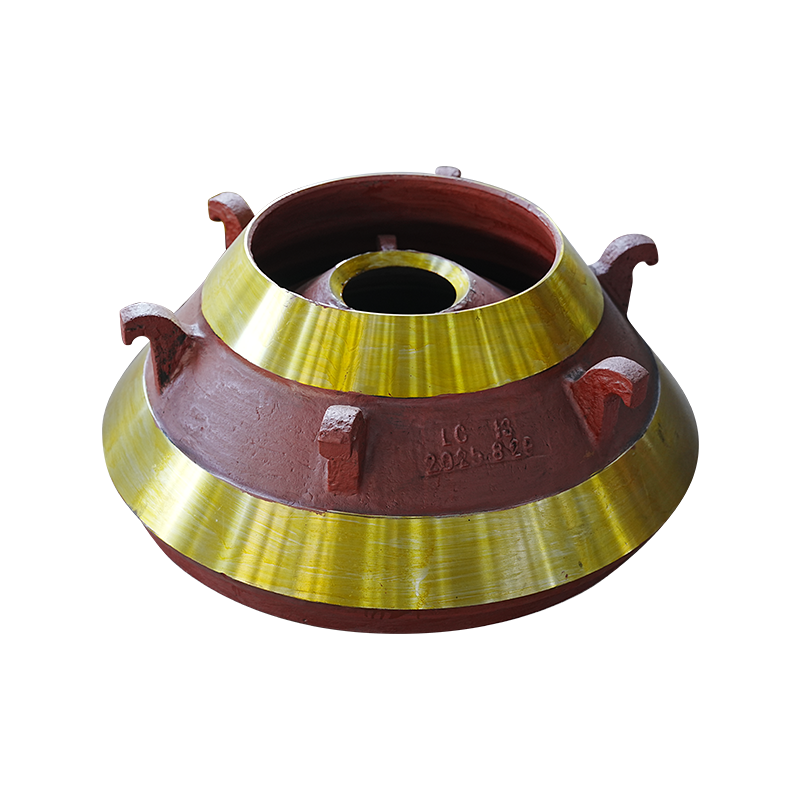
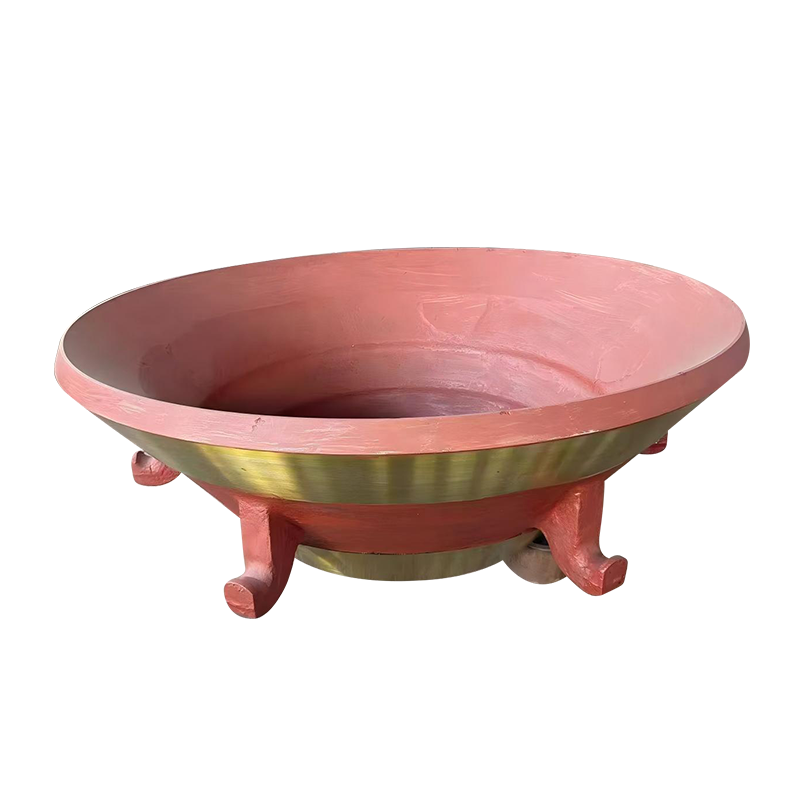
Cone crusher mantles and concaves operate under repeated compression. Their wear pattern depends on feed size, rock strength, chamber profile, CSS, eccentric throw, and material characteristics.
Metso states that different manganese grades can be matched to different rock properties and crushing conditions, with manganese content and alloying elements adjusted around factors such as feed strength, gradation, and reduction ratio.
Our cone crusher spare parts include cone crusher walls and related wear components. We evaluate the crusher model and application before confirming dimensions and casting specifications because a liner is both a wear component and part of the crushing cavity.
Impact crusher blow bars have a particularly demanding job. The rotor accelerates the blow bar into the material, creating high-speed impact. The material then interacts with impact plates and may experience repeated breakage.
High manganese steel can provide useful toughness under impact-heavy conditions, while high-chrome alloys can be appropriate for abrasive feed with controlled impact. The actual result depends on feed size, rotor speed, impact intensity, material distribution, and the possibility of tramp material.
Our impact crusher spare parts include impact plates, guard plates, liners, and other components. We also supply high chrome blow bars for applications requiring stronger abrasion resistance.
Hammer crushers expose hammer heads to repeated impact. Feed hardness, particle size, rotor speed, and the amount of abrasive material all influence the working environment.
Our product range includes high chrome alloy crusher hammer heads and dual-liquid composite alloy hammer heads. Such products allow different material structures to be considered around different wear conditions rather than relying on a single casting material for every application.
| Part | Main Mechanical Action | Important Material Considerations |
| Jaw plate | Compression + impact | Toughness, work hardening, abrasion resistance |
| Cone mantle / concave | Compression + abrasion | Manganese grade, chamber condition, feed strength |
| Impact blow bar | High-speed impact + abrasion | Impact toughness or abrasion resistance |
| Hammer head | Repeated impact + abrasion | Alloy balance and impact conditions |
| Impact liner | Impact + sliding abrasion | Hardness, toughness, and geometry |
A common mistake is to compare alloys only by their hardness value. Higher hardness can improve resistance against certain abrasive mechanisms, but hardness without adequate toughness can become a disadvantage under severe impact.
Metso's technical material presents the relationship clearly: manganese steel provides a combination of toughness and work hardening under sufficient impact, while high-chrome white iron provides strong abrasion resistance but has greater limitations under heavy impact.
That balance is central to our material discussions at Linchuan. We do not simply ask, “How hard is the alloy?” We also ask:
Our technical communication starts with the application rather than a generic parts list. Buyers can provide several pieces of information before requesting a casting specification.
| Required Information | Why It Matters |
| Crusher model | Determines dimensional and mechanical compatibility |
| Part name | Identifies the required wear mechanism |
| Rock type | Provides a starting point for hardness and abrasiveness analysis |
| Maximum feed size | Indicates potential impact loading |
| Feed gradation | Shows the distribution of coarse and fine particles |
| Crushing stage | Primary, secondary, and tertiary duties create different conditions |
| Current alloy | Provides a reference for previous wear behavior |
| Observed wear pattern | Helps identify abrasion, impact, or localized loading |
| Target service condition | Supports material and geometry discussions |
Our manufacturing approach combines high manganese steel, high chromium cast iron, and other wear-resistant casting solutions. Linchuan operates a 30-acre facility with more than 150 employees and more than 30 technical personnel, focusing on mining crushing, sand-making, and wear-resistant castings.
Our product portfolio includes jaw crusher parts, cone crusher spare parts, impact crusher spare parts, hammer crusher spare parts, high chrome blow bars, and alloy hammer heads. This allows us to approach the wear problem from the component level while considering the crusher and feed material together.
We also pay attention to heat treatment and casting quality. Metso's technical documentation notes that controlled temperature, time, and quenching are critical to producing suitable castings, while crusher chamber profile also affects wear-part performance and service life.
Different rocks can create different combinations of abrasion, impact, compression, and sliding contact. Granite may require a strong balance of toughness and abrasion resistance. Iron ore can place greater emphasis on abrasive wear. Recycled concrete can introduce sudden impact from embedded steel. Limestone may create a comparatively moderate wear environment, although the actual quarry conditions still need to be checked.
That is why we treat rock crusher parts as application-specific components rather than interchangeable castings. Manganese steel, high-chrome cast iron, martensitic alloy steel, and specialized composite solutions each have useful operating windows.
At Linchuan, we match the material system with the crusher type, feed characteristics, and observed wear pattern. A suitable alloy is not simply the hardest available material. It is the material whose balance of toughness, hardness, abrasion resistance, and impact tolerance fits the actual crushing environment.
The rock tells us where the wear comes from; the crusher tells us how that wear is delivered. Bringing those two factors together gives us a more reliable basis for developing and supplying rock crusher parts for different crushing applications.
HOT PRODUCTS
interested?
Contact us!

No. 88 Wenbo Road, Jinxi Development Zone, Wucheng District, Jinhua City, Zhejiang Province, China

+86-18869925678
+86-13605822008

Mining Crushing & Sand-Making Manufacturer
 English
 中文简体
中文简体
 русский