
/ Contact Us
Zhejiang Linchuan Machinery Manufacturing Co., Ltd.
No. 88 Wenbo Road, Jinxi Development Zone, Wucheng District, Jinhua City, Zhejiang Province, China
+86-13605822008
2026-07-31
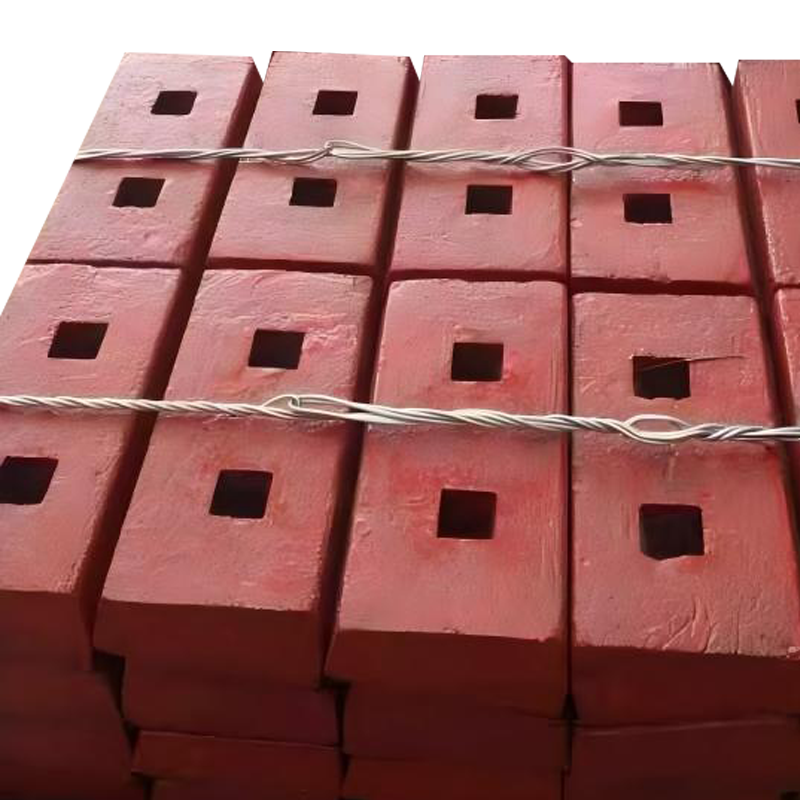
Field reports from quarry and recycling operations indicate a noticeable change in wear behavior of Impact Crusher Liner Plate systems under hard rock conditions. Instead of steady abrasion, liner surfaces are now exposed to sharper impact spikes, uneven energy dispersion, and accelerated localized deformation.
These changes are closely linked to harder feed materials such as basalt, granite, and high-silica aggregates, which significantly increase the intensity of collision events inside impact crushers.
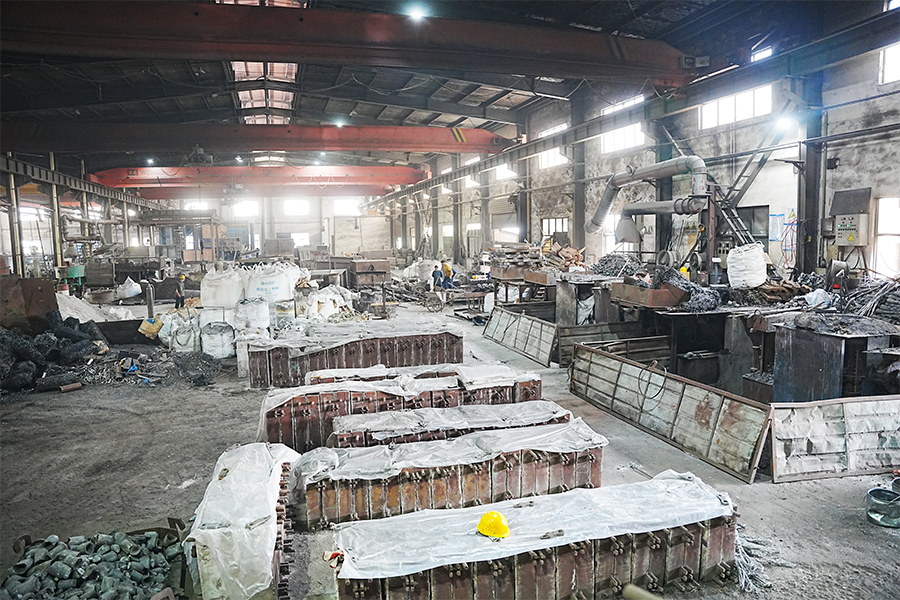
Impact crusher liners function as sacrificial surfaces that absorb and redirect kinetic energy. Hard rock feed alters how this energy is distributed across the liner face.
Studies on impact crusher systems confirm that material is accelerated by rotor blow bars and then collides with impact plates, making liner surfaces critical points for secondary fracture and energy absorption.
Unlike softer materials that wear liners mainly through abrasion, hard rock introduces a combined mechanism of impact fatigue and micro-cutting abrasion.
Hard rock feed conditions intensify wear rates because abrasion particles act like continuous grinding media inside the crushing chamber, increasing liner consumption over time.
As liner surfaces degrade, the original impact angle inside the crushing chamber gradually shifts. This geometric change directly influences stress distribution and fracture efficiency.
Impact plates are designed to control material trajectory and ensure proper secondary breakage, meaning any surface deformation directly affects crusher output consistency.
Hard rock applications accelerate fatigue mechanisms inside liner materials due to repeated high-energy loading cycles.
Each impact event transfers kinetic energy into deformation energy, and repeated cycles gradually weaken the structural integrity of the liner surface even when no immediate failure is visible.
Wear evolution in impact liners does not remain uniform under high-hardness feed. Instead, distinct pattern shifts emerge across different zones of the plate.
These wear patterns indicate that material flow inside the chamber is no longer stable, which directly correlates with increased stress concentration on liner surfaces.
Before physical failure occurs, several operational indicators suggest increasing stress on impact liner systems in hard rock environments.
These indicators reflect a loss of stable energy transfer between rotor and liner surface, often signaling that wear progression has reached a stage where performance degradation becomes measurable.
To handle higher stress environments, impact liner design is shifting toward more complex material systems rather than relying on single alloy upgrades.
These design directions aim to balance impact absorption capability with abrasion resistance, extending operational stability under increasingly aggressive crushing conditions.
Higher stress conditions in hard rock applications are reshaping how Impact Crusher Liner Plate systems perform over time. Wear is no longer a uniform process but a dynamic interaction between energy concentration, material hardness, and chamber geometry evolution.
Understanding these mechanisms allows operators to better anticipate performance drift and align maintenance decisions with real operating conditions rather than fixed time cycles.
HOT PRODUCTS
interested?
Contact us!

No. 88 Wenbo Road, Jinxi Development Zone, Wucheng District, Jinhua City, Zhejiang Province, China

+86-18869925678
+86-13605822008

Mining Crushing & Sand-Making Manufacturer
 English
 中文简体
中文简体
 русский