
/ Contact Us
Zhejiang Linchuan Machinery Manufacturing Co., Ltd.
No. 88 Wenbo Road, Jinxi Development Zone, Wucheng District, Jinhua City, Zhejiang Province, China
+86-13605822008
2026-08-07
Producing consistent aggregate shape is an important target for many quarry, mining, and recycling operations. Although the crushing process depends on many factors, the condition and design of key wear components inside an impact crusher have a direct influence on the final particle shape. Parts such as blow bars, impact plates, and liners control how materials are struck, redirected, and fractured inside the crushing chamber.
Many operators focus on crusher capacity and wear cost, but the geometry of finished products is also closely related to the condition of the machine’s internal components. The right Impact crusher spare parts can help maintain stable crushing performance and produce aggregates with better cubic characteristics.
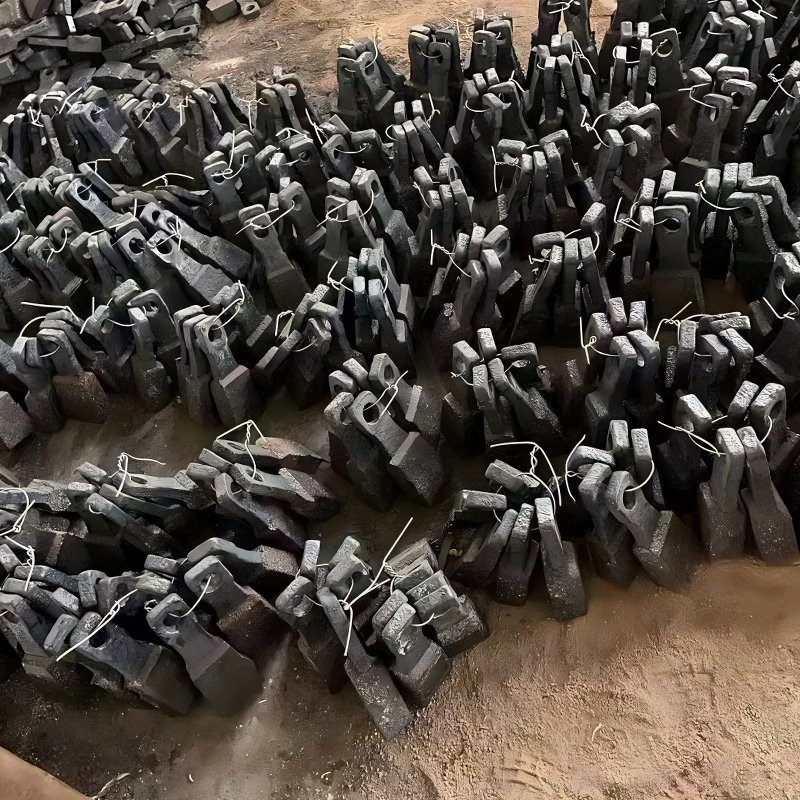
Blow bars are among the most important components inside an impact crusher because they deliver the first direct force to incoming materials. Installed on the rotor, these bars rotate at high speed and transfer kinetic energy to rocks, causing them to break along natural fracture points.
The condition, material composition, and profile design of blow bars influence the crushing result. A worn blow bar usually changes the impact angle and reduces the effectiveness of material fragmentation, which may create more elongated particles or uneven sizes.
A typical impact crusher rotor may operate at several hundred revolutions per minute, creating repeated high-energy impacts. Because of this, even small changes in blow bar thickness or surface profile can influence the trajectory of crushed material and affect the final product shape.
After materials leave the rotor area, they travel toward impact plates, also known as breaker plates. These components create a secondary impact zone where particles receive additional crushing force.
The distance between blow bars and impact plates, often called the crushing gap, plays a major role in controlling output size. A smaller gap generally increases the amount of secondary impact, while a larger gap allows bigger particles to pass through.
A properly maintained impact plate helps create more controlled collision points. This improves the chance of producing cubical aggregates instead of flat or elongated pieces. Impact plates work together with blow bars, meaning the performance of one component can influence the working condition of another.
Side liners may not directly crush materials, but they help maintain the correct internal environment for stable operation. These protective plates reduce damage to the crusher housing caused by continuous abrasion and impact.
Once side liners become heavily worn, the internal dimensions of the crushing chamber may change. This can affect material movement, impact distribution, and overall crushing consistency.
Although the rotor is not usually classified as a wear plate, its condition has an important connection with product quality. The rotor holds the blow bars and controls their movement speed during operation.
A balanced rotor allows impact forces to remain consistent. However, worn or incorrectly installed components may cause vibration, uneven impact energy, and unstable crushing results.
Regular inspection of rotor components, locking systems, and blow bar installation conditions helps maintain reliable operation. Proper matching between rotor design and replacement parts is also important for achieving predictable output quality.
Crusher parts alone cannot determine product shape. Feed material properties, including hardness, moisture content, size distribution, and internal structure, also influence how rocks fracture.
For example, limestone generally breaks differently from granite because of differences in hardness and fracture behavior. Operators need to match wear components with actual crushing conditions rather than choosing parts based only on price or hardness ratings.
The relationship between crusher components and product shape is a combination of engineering design, material selection, and operating conditions. Blow bars determine the initial impact force, impact plates control secondary crushing, and liners maintain the stability of the crushing chamber.
For buyers searching for replacement solutions, understanding these functions makes it easier to identify suitable Impact crusher spare parts for different applications. Instead of replacing components only after failure, monitoring wear patterns and performance changes can provide valuable information about product quality.
A well-matched combination of wear parts allows impact crushers to deliver more stable output and consistent aggregate shape. As crushing requirements become more specialized, component design and material technology will continue to play an important role in producing reliable finished products.
HOT PRODUCTS
interested?
Contact us!

No. 88 Wenbo Road, Jinxi Development Zone, Wucheng District, Jinhua City, Zhejiang Province, China

+86-18869925678
+86-13605822008

Mining Crushing & Sand-Making Manufacturer
 English
 中文简体
中文简体
 русский