
/ Contact Us
Zhejiang Linchuan Machinery Manufacturing Co., Ltd.
No. 88 Wenbo Road, Jinxi Development Zone, Wucheng District, Jinhua City, Zhejiang Province, China
+86-13605822008
2026-08-14
Hammer crushers operate under severe working conditions where continuous impact, abrasion, and material pressure place heavy demands on internal components. Although wear is a normal part of crushing operations, many users experience unexpected failures where replacement parts wear out much earlier than planned. Understanding the reasons behind premature damage helps operators improve equipment reliability and avoid unnecessary production interruptions.
The performance of hammer crusher wear parts depends on multiple factors, including material characteristics, component design, installation accuracy, and operating conditions. A hammer head may appear strong from the outside, but internal stress, improper matching, or unsuitable alloy selection can shorten its working period. Research on hammer crusher failures has shown that wear problems are often caused by combined effects of impact loads, abrasive particles, and mechanical stress concentration.
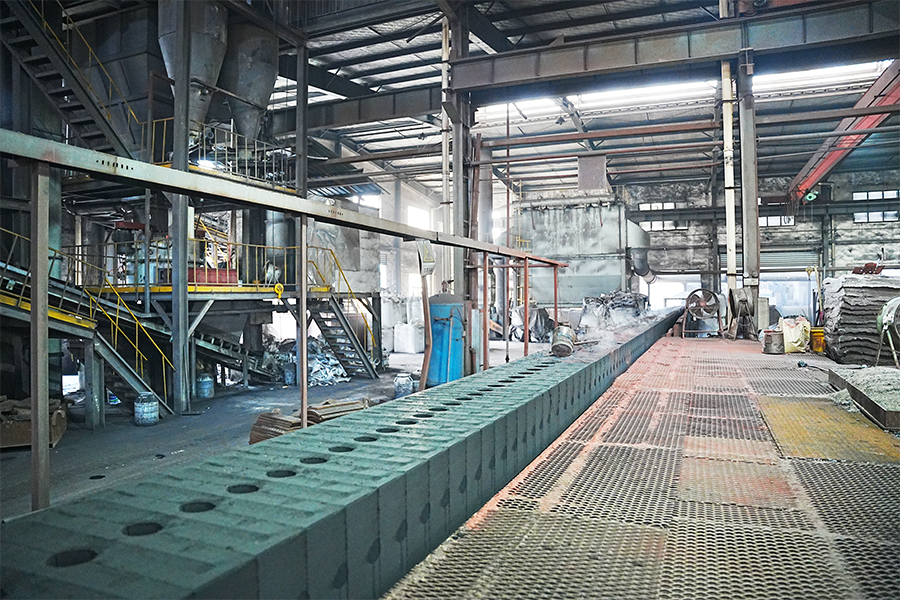
The material composition of crusher wear parts directly affects their ability to handle different crushing environments. Many premature failures happen because the selected alloy does not match the properties of the processed material.
For example, high chrome cast iron hammer heads used in highly abrasive materials may suffer from carbide cracking, surface damage, and material loss when the working environment creates intense impact stress. The failure mechanism usually involves both abrasive wear and impact-related damage.
A common misunderstanding is that a harder hammer head will always provide better durability. Hardness is important, but it must be balanced with toughness. Crusher components need enough surface resistance to reduce abrasion while maintaining the ability to absorb repeated impact forces.
During operation, hammer heads experience thousands of collisions with rocks every hour. A component with excessive hardness but insufficient toughness may develop cracks after repeated impacts. Once cracks appear, material loss can accelerate quickly.
The characteristics of feed materials have a major influence on wear speed. Rocks with high silica content, sharp edges, or irregular shapes can create stronger abrasion forces against hammer surfaces.
Large feed sizes may also produce additional impact pressure because the hammer head must absorb greater collision energy. This repeated overload can cause deformation, cracks, and uneven surface wear.
Matching wear components with actual feed conditions is essential. A hammer designed for limestone crushing may not provide the same performance in applications involving harder minerals or recycled materials.
Even high-quality hammer crusher parts can fail early if installation conditions are incorrect. The position of hammer heads, locking systems, and rotor balance all influence how impact forces are distributed.
Uneven installation may cause one section of the hammer to receive more load than other areas. This creates localized wear, reduces crushing consistency, and increases the possibility of component damage.
Failure analysis of industrial hammer crushers has identified that mechanical stress concentration around hammer connections and rotor components can contribute to cracking and deformation problems.
The working environment of a hammer crusher changes continuously. Production rate, feeding method, rotor speed, and crushing chamber conditions all affect how wear parts perform.
A crusher running beyond its designed capacity may experience excessive impact energy. At the same time, uneven feeding can concentrate loads in specific areas instead of distributing them across the entire crushing chamber.
Waiting until a hammer head breaks completely can create unexpected downtime and additional repair costs. Regular inspection allows operators to identify abnormal wear patterns before serious damage occurs.
Common warning signs include uneven surface loss, visible cracks, reduced crushing performance, unusual vibration, and changes in finished material size.
Premature failure of hammer crusher components is rarely caused by a single factor. Material selection, feed conditions, installation quality, and operating methods work together to determine service performance.
Choosing suitable hammer crusher wear parts requires understanding the complete crushing environment rather than focusing only on purchase cost. Components with the correct alloy structure, dimensional accuracy, and wear characteristics can provide more stable operation under demanding conditions.
A detailed analysis of wear patterns also provides valuable information for future part improvements. By understanding why failures happen, operators can select more suitable solutions, reduce unexpected replacements, and maintain consistent crushing results.
HOT PRODUCTS
interested?
Contact us!

No. 88 Wenbo Road, Jinxi Development Zone, Wucheng District, Jinhua City, Zhejiang Province, China

+86-18869925678
+86-13605822008

Mining Crushing & Sand-Making Manufacturer
 English
 中文简体
中文简体
 русский