
/ Contact Us
Zhejiang Linchuan Machinery Manufacturing Co., Ltd.
No. 88 Wenbo Road, Jinxi Development Zone, Wucheng District, Jinhua City, Zhejiang Province, China
+86-13605822008
2026-09-04
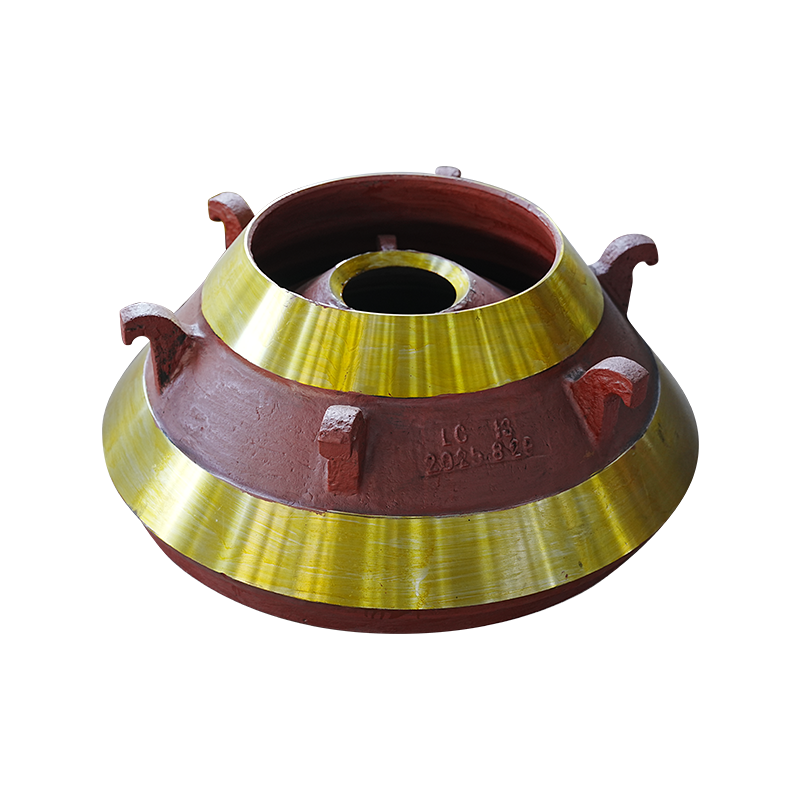
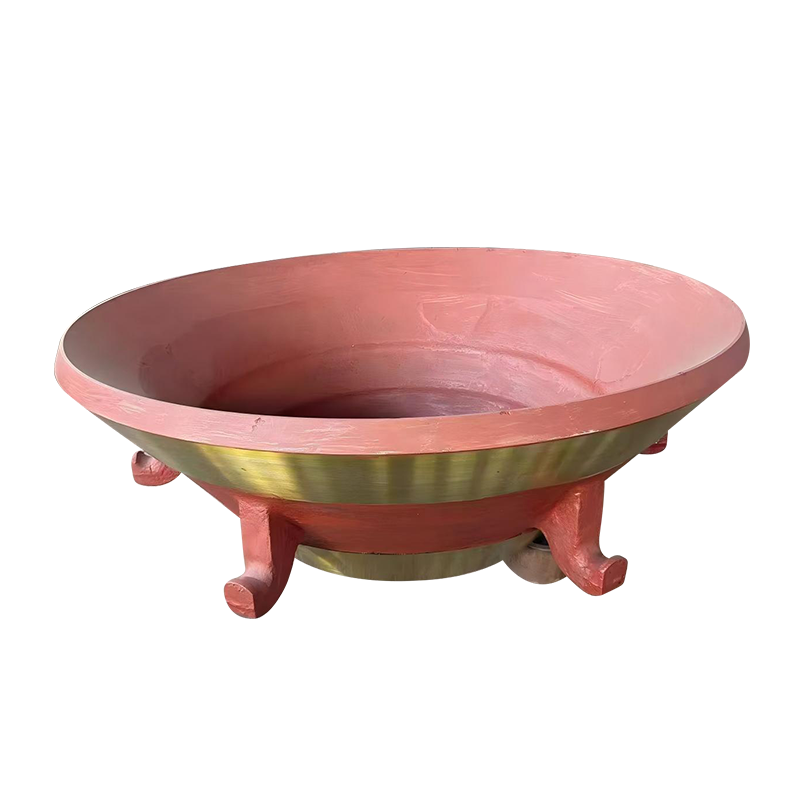
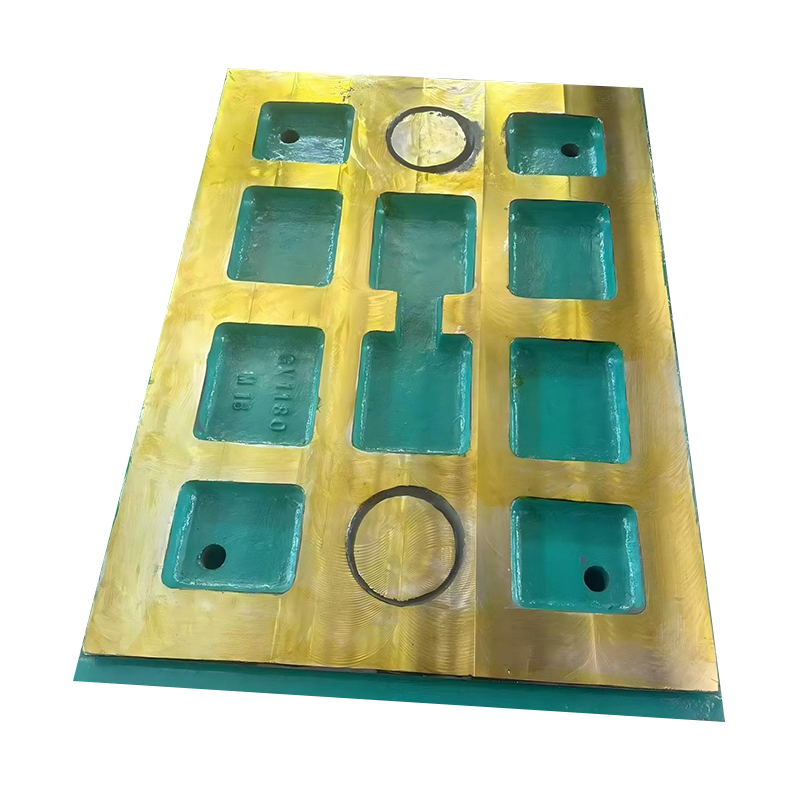
Hard ore changes more than the crushing pressure inside a machine. Granite, iron ore, quartzite and other abrasive materials can place greater stress on wear components, especially jaw plates, blow bars, impact plates and cone crusher liners. As rock hardness increases, Mining Crusher Machine Spare Parts need to balance hardness, toughness and impact resistance rather than relying on a single material property.
Material selection becomes closely connected with the type of ore being processed. High-manganese steel, martensitic steel and high-chrome alloys each respond differently to heavy impact and abrasive contact.
Hard rock does not simply make a crusher part wear faster. It can change where and how wear develops.
Impact crusher components face a particularly demanding combination of abrasion and repeated impact. Blow bars strike incoming material at high rotor speeds, while impact plates absorb the material after it is redirected through the crushing chamber.
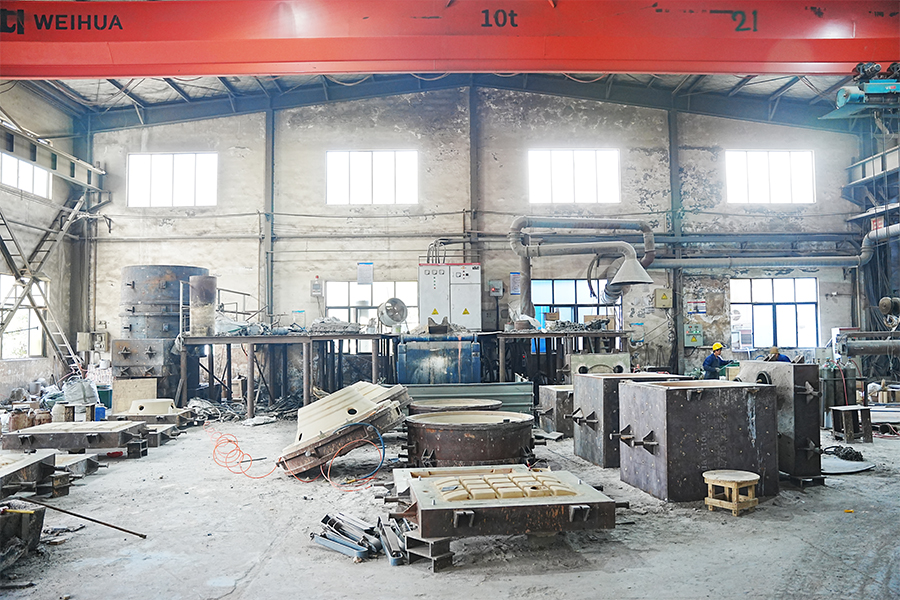
Harder ore may appear to call for a harder spare part, but static hardness alone cannot determine service performance. A very hard alloy can resist abrasion effectively while becoming less tolerant of sudden impact. High-manganese steel follows a different mechanism: its surface can work-harden under repeated impact while retaining a tougher internal structure. Typical manganese grades include Mn13, Mn18 and related manganese-chromium grades.
This difference matters for Mining Crusher Machine Spare Parts used in applications where hard ore is mixed with oversized feed or occasional uncrushable material.
High-manganese steel can be useful in crushing conditions where impact energy is substantial. Its work-hardening behavior allows the exposed surface to become considerably harder during operation while the core retains impact toughness. This makes manganese suitable for jaw plates, liners and other components exposed to repeated mechanical shock.
High-chrome materials offer strong abrasion resistance and are commonly considered for highly abrasive feed with controlled impact conditions. Some high-chrome blow bars are supplied around 650–750 HB, while certain high-chrome cast irons reach approximately 58–62 HRC depending on composition and treatment.
Such materials are less tolerant of tramp metal or very large impact loads, so feed size and operating conditions need to match the alloy specification.
Hardness and feed size work together. Large pieces of hard rock can create a much higher instantaneous load than smaller particles of the same material. This makes crusher settings, chamber dimensions and rotor conditions relevant to spare-part selection.
Technical guidance for impact crushers commonly distinguishes between high-manganese materials for higher-impact applications and high-chrome materials for abrasive feed with limited impact shock.
Hard-ore applications require more than a crusher model number. Buyers evaluating Mining Crusher Machine Spare Parts can provide several operating details to achieve a more suitable specification:
These details help distinguish between a part that needs greater abrasion resistance and another that needs additional impact toughness. Crusher wear-part suppliers also commonly match alloy and profile with the machine, feed characteristics and crushing application rather than using a single specification across every site.
Hard ore puts greater demands on crusher components, but simply increasing hardness is not always the right response. Wear resistance, impact toughness, alloy composition, feed size and crusher configuration need to work together.
Choosing Mining Crusher Machine Spare Parts according to the actual crushing conditions can help maintain the intended component profile and reduce premature damage. For hard-rock applications, the useful question is not simply how hard the spare part is, but whether its material properties match the type of stress created by the ore.
HOT PRODUCTS
interested?
Contact us!

No. 88 Wenbo Road, Jinxi Development Zone, Wucheng District, Jinhua City, Zhejiang Province, China

+86-18869925678
+86-13605822008

Mining Crushing & Sand-Making Manufacturer
 English
 中文简体
中文简体
 русский